Transferring a vehicle title in Oregon is required whenever ownership changes, whether for motorcycles, cars, trucks, or recreational vehicles. Completing the title transfer within 30 days of sale ensures the new owner’s legal rights and updates the Oregon DMV ownership records without delay. The process protects buyers from liability for previous tickets or accidents and confirms the seller is no longer responsible for the vehicle. Missing this deadline can trigger late transfer fees and complicate registration, especially when transferring plates or registering the vehicle for road use. Understanding the required forms, fees, and official procedures makes the process faster and prevents errors that could delay legal ownership confirmation.
The transfer requires submitting the original title, completing a title application, and providing additional documents like odometer disclosures, lien releases, or proof of previous ownership. Vehicles purchased from another state may also require a VIN inspection or Use Tax Certificate. Using the OR License Plate Portal and DMV2U online services streamlines the process, allowing applicants to calculate fees, check eligibility, and submit certain forms digitally. Special circumstances, such as deceased owner transfers, lost titles, or salvage vehicles, require extra documentation, which the DMV outlines clearly. Ensuring each requirement is met protects both parties, secures proper registration, and guarantees the vehicle ownership transfer is legally recognised.
How Vehicle Title Transfers Work in Oregon
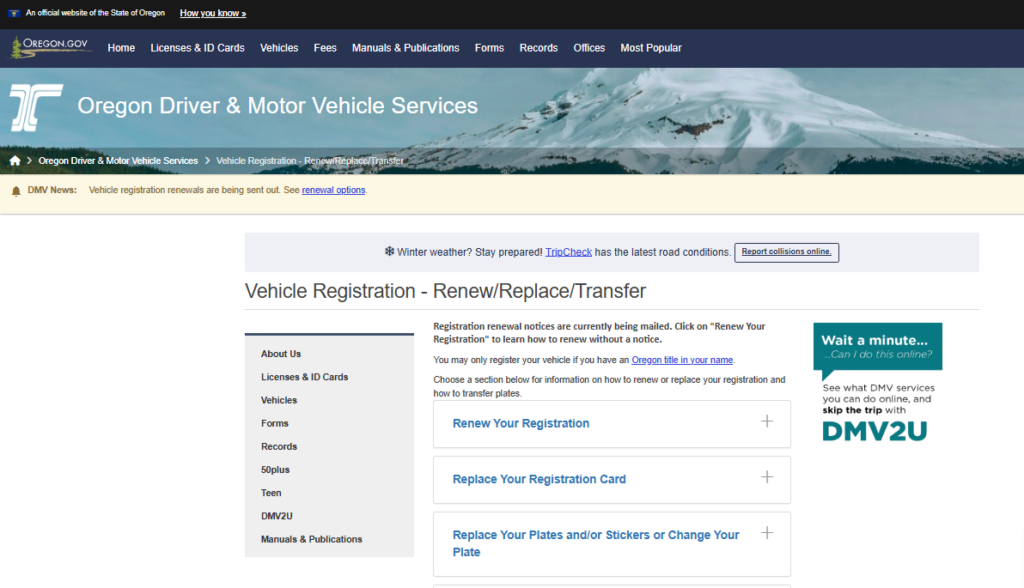
A vehicle title is a legal document proving ownership of a motorcycle, car, or other vehicle in Oregon. Transferring the title ensures the DMV updates its records and establishes who is legally responsible for the vehicle. The Oregon title transfer process involves several https://www.oregon.gov/odot/dmv/pages/vehicle/registration.aspx steps for both buyers and sellers. When a motorcycle changes hands, the seller must provide the original title or ownership document. This often includes a certificate of origin for new vehicles. The buyer then completes a title application and submits it to the DMV along with any required fees. This process guarantees that the state’s ownership records accurately reflect the new owner.
Elements in the transfer process include:
- Title Endorsement: The seller signs the title to officially transfer ownership. This signature confirms the buyer now holds legal rights to the motorcycle.
- Odometer Disclosure: For motorcycles meeting certain age requirements, mileage documentation may be required to comply with federal and state regulations.
- Lien Releases: If the previous owner had a loan on the motorcycle, a lien release must accompany the title to show it is free of financial claims.
The buyer must bring the completed title application, the endorsed title, and supporting documents to the DMV. Submitting accurate paperwork ensures there are no delays or late transfer fees, which can range from $25 to $50 depending on the number of days past the sale date.
When You Need to Transfer a Vehicle Title
A vehicle title in Oregon must be transferred whenever ownership https://www.oregon.gov/odot/dmv/pages/vehicle/titlereg.aspx key steps of a motorcycle, car, or other vehicle changes. This process ensures the state’s DMV records reflect the new owner and helps prevent legal or financial issues.
Title transfer is required in several situations:
- Buying or Selling a Vehicle: Whenever a motorcycle or car is sold, the buyer must receive the title, and the seller must sign it over. This establishes legal ownership and protects both parties.
- Deceased Owner: If a vehicle owner passes away, the title must be transferred to heirs or estate representatives. Proper documentation, such as a death certificate and probate or small estate papers, is necessary to complete this transfer.
- Out-of-State Purchase: Vehicles purchased from another state require a title transfer in Oregon to register the vehicle locally. This may involve a VIN inspection and submitting the out-of-state title along with a foreign ownership document, if applicable.
- Vehicles with Liens: If a vehicle has a loan or security interest, the lienholder often handles part of the title transfer. The owner must provide a lien release or authorisation from the lender to complete the process.
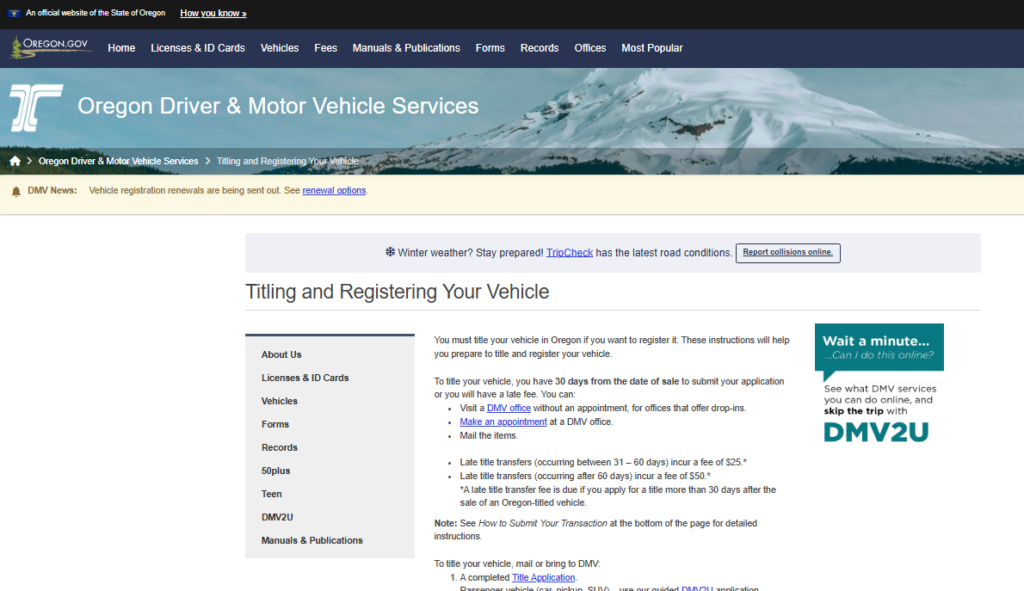
Oregon law gives owners 30 days from the sale date to submit a title transfer. Missing this window can result in a late transfer fee, starting at $25 for transfers between 31–60 days and $50 after 60 days.
Steps to Transfer Your Vehicle Title
Transferring a vehicle title in Oregon is a structured process that ensures the new owner is legally recognised. Whether you are transferring a standard title or replacing a lost vehicle title, completing the process accurately protects both the buyer and seller and ensures DMV ownership records are updated promptly.
Collect Required Documents
Before starting, gather all necessary documents to avoid delays. Accurate paperwork is key to a smooth vehicle ownership transfer. Required documents include:
- Original title or ownership document: The seller must provide the original title. If the vehicle is new, a certificate of origin serves this purpose.
- Odometer disclosure form: Required for vehicles under 10 years old, this form verifies mileage between the buyer and seller.
- Lien releases: If a previous loan existed, original releases from all lien holders must accompany the title.
- Bills of sale or ownership proofs: Documents showing the transfer of ownership between parties.
- Duplicate title if lost: For vehicles with a missing title, obtain a replacement before submitting your application.
Using the correct forms and ensuring proper title endorsement protects both parties in the buyer-seller process. Keep all originals safe, as the DMV may request verification.
Complete the Title Application
After collecting documents, the next step is filling out the title application. Oregon provides both DMV2U online and paper applications.
- Choose the correct form for the vehicle type: passenger cars, motorcycles, RVs, or other specialised vehicles.
- Double-check the late title transfer fees: $25 for transfers submitted 31–60 days after sale, and $50 for transfers over 60 days late.
- Include all supporting documentation with the application, such as lien releases, odometer disclosures, and bills of sale.
Filling out the application carefully ensures DMV approval without unnecessary back-and-forth. Using DMV2U can speed up submission and fee calculation while reducing manual errors.
Submit Your Application
Once the application is complete, it can be submitted either in-person or by mail:
- In-person: Visit a DMV office, either as a drop-in or by scheduling an appointment. DMV staff will review your documents and process the transfer immediately.
- By mail: Include all required documents, the completed application, and applicable fees. Mailing ensures compliance if visiting in-person is inconvenient.
Submitting properly prevents delays in title application processing and keeps DMV ownership records current. Using DMV2U for online forms simplifies the process and allows users to track submissions.
Special Cases
Certain situations require extra steps:
- Out-of-state titles: Vehicles from other states must undergo a VIN inspection ($9) to verify identity and condition.
- Vehicles bought from out-of-state dealers: A Use Tax Certificate may be required if the vehicle is new or has fewer than 7,500 miles.
- Recreational Vehicles (RVs), motorcycles, and assembled or reconstructed vehicles: Specific documentation may be necessary for these types, such as construction or assembly details.
Addressing these special scenarios ensures compliance and avoids duplicate title or ownership conflicts. Paying attention to unique requirements protects both the buyer and seller during the transfer process.
Fees and Timelines for Title Transfer in Oregon
Transferring a vehicle title in Oregon comes with specific fees and set timelines. Most title transfers are processed efficiently, but late applications can result in extra charges. The standard title fee for most vehicles in Oregon is $93, though this may vary slightly depending on the vehicle type. In addition to the title fee, registration fees apply if the vehicle is being registered at the same time. Motorcycles, trucks, and speciality vehicles can have different registration costs, so it is helpful to check the DMV fee calculator for exact amounts. If a title transfer occurs more than 30 days after the sale, the DMV applies a late title transfer fee. Transfers submitted between 31–60 days incur a $25 fee, while transfers after 60 days carry a $50 fee. These fees are added on top of the standard title and registration charges.
Timeline expectations for processing a title transfer depend on several factors:
- DMV processing: Most in-person applications are processed the same day or within a few business days.
- Mail submissions: Applications sent by mail typically take 2–4 weeks to process.
- VIN inspections: Vehicles with out-of-state titles or foreign ownership documents require a VIN inspection, which can add a few days to the timeline.
- Duplicate title requests: If the original title is lost, obtaining a replacement may extend the process by 1–2 weeks.
To keep the process smooth, ensure that all required documents are complete, including title applications, lien releases, odometer disclosures, and any additional DMV forms. Properly prepared applications help avoid delays and additional late transfer penalties.
Transferring Plates and Registration During Title Transfer
When a vehicle changes ownership in Oregon, the plates and registration may be transferred to the new owner, including cases involving a Title Transfer After Death, where the DMV requires valid documentation, such as executor authority or inheritance proof, to update ownership records correctly. Plate transfers are allowed only between vehicles of the same type, such as a car to a car or a motorcycle to a motorcycle, and the plates must be readable, undamaged, and meet DMV standards. If a plate is missing or damaged, replacement plates must be issued instead of transferring the existing ones. The registration period stays with the plate during the transfer, meaning if a vehicle has six months remaining on its registration, the new owner receives that same period, helping avoid unnecessary fees and ensuring accurate DMV records.
Fees for Plate Transfer:
- Standard fee: $30
- Additional fees may apply if the plates are personalised or require special handling.
Steps Transfer Process:
- Verify Plate Eligibility: Ensure the plate is the correct type and in good condition.
- Submit Ownership Documents: Provide the title, bill of sale, and any lien release to the DMV.
- Pay Transfer Fees: Include the $30 transfer fee when applying.
- Update DMV Records: The DMV updates its ownership records to reflect the new owner.
Transferring plates can save money and time, avoiding the need for new plates while keeping registration periods intact. It also keeps DMV registration records accurate, preventing potential fines or registration issues.
Special Situations in Title Transfer
Transferring a vehicle title in Oregon can vary depending on unique circumstances. Certain situations, such as a deceased owner, lien holder involvement, lost titles, salvage vehicles, or foreign-owned vehicles, require extra steps and documentation.
Deceased Owner
When a vehicle’s owner has passed away, the title transfer requires legal proof of inheritance, such as a death certificate, probate documents, or a small estate affidavit. All heirs must typically sign the Oregon title application, and submitting a bill of sale or estate documentation ensures the DMV records the new owner correctly while avoiding future disputes.
Lien Holder / Security Interest
If the vehicle has an active loan, the lienholder must be involved in the title transfer. Oregon DMV typically requires the lender to submit the title application or authorise the release of ownership. The lien must be formally released before the buyer can obtain a clear title.
Steps to follow:
- Contact the lienholder for their procedures.
- Provide any payoff statement or loan closure documents.
- Submit a lien release along with the title application.
This ensures the new owner receives a title free of financial encumbrances.
Lost or Duplicate Titles
If the original title is lost, damaged, or unavailable, a duplicate title must be requested before transferring ownership. This is required for vehicles 2011 or newer to meet odometer disclosure requirements. Vehicles 2010 or older can mark the Replacement Oregon Title box on the application.
How to request:
- Complete a Duplicate Title Request form.
- Pay the replacement title fee.
- Submit any supporting documentation, like proof of identity and previous ownership records.
Obtaining a duplicate title prevents legal issues and ensures compliance with DMV regulations.
Salvage or Rebuilt Vehicles
Salvaged, rebuilt, or reconstructed vehicles require a special certification from the DMV to verify their condition. Completing the title application, disclosing the salvage status, and completing a VIN inspection ensures the vehicle can be legally titled and safely registered in Oregon.
Foreign-Owned Vehicles
Vehicles from another country must provide a foreign ownership document and undergo a VIN inspection at the DMV. Submitting the foreign title, customs or import papers, and paying applicable title and registration fees allows Oregon residents to legally title and register foreign vehicles without delays or penalties.
How to Avoid Common Mistakes in Oregon Title Transfer
Transferring a vehicle title in Oregon can be smooth if all documents are complete and forms are correct. Missing paperwork, submitting late, or using the wrong forms are the main reasons applications get delayed or rejected.
Missing Documents
Many Oregon residents encounter avoidable issues when transferring titles, but careful attention can prevent fees and processing delays. One common problem is missing documents. The DMV requires the original title, lien releases, odometer disclosure forms, and bills of sale. Without any of these, the application can be returned, forcing extra trips and delays. Keeping a checklist of all required documents ensures nothing is overlooked.
Late Submission and Fees
Submitting your application after the 30-day window triggers a late title transfer fee—$25 if submitted 31–60 days late, and $50 after 60 days. Timely submission is crucial, especially for vehicles recently purchased or inherited. Some owners forget that out-of-state titles may require VIN inspections or additional paperwork, which can extend processing time.
Incorrect Forms
Another frequent mistake is using incorrect forms. Oregon provides specific applications for passenger vehicles, motorcycles, recreational vehicles, and vehicles with out-of-state titles. Filling out the wrong form or leaving sections blank can lead to processing errors. Using DMV2U online forms or double-checking printed forms reduces this risk.
Title Endorsement and Odometer Disclosure
Properly endorsing the title is essential. Title endorsement and accurate odometer disclosure help maintain correct DMV ownership records. Even small errors in signatures or numeric entries can delay ownership transfer. Reviewing each section before submission avoids common pitfalls.
Oregon DMV Online Services for Title Transfer
Oregon residents can complete most title transfer steps quickly using DMV2U, the official online service. This platform allows users to submit applications, calculate fees, and process title transfers without visiting a DMV office in person. Using DMV2U for title transfers saves time and reduces errors by guiding users through each required step. Vehicle owners can upload key documents directly to the platform, including:
- Completed Title Application forms for cars, motorcycles, or recreational vehicles
- Original titles or ownership documents, including duplicate titles if the original is lost
- Odometer disclosure statements when required for vehicles under 10 years old
- Lien release documents for vehicles with active loans
- Bills of sale or other proof of ownership
The platform also calculates the total registration fees and applicable title transfer fees, helping users avoid mistakes when paying. DMV2U sends confirmation once the submission is complete, and any additional steps, such as VIN inspections for out-of-state vehicles, are clearly indicated.
(FAQ) About Transfer Vehicle
Many Oregon residents have questions when transferring a vehicle title, especially regarding documentation, timing, and special situations. The following answers provide clear guidance to help buyers and sellers complete a vehicle title in Oregon smoothly and in compliance with DMV rules.
Can I transfer the title without the seller present?
Yes, a title transfer can be completed even if the seller is not physically present, as long as all required documents are provided. The seller must provide a signed title, a bill of sale, and any lien release if applicable. The buyer submits these, along with the title application, to the DMV. Using DMV2U online services can simplify the process and reduce processing time. Verifying endorsements and signatures ensures smooth updates to DMV ownership records.
How long does it take for DMV to process a title transfer?
Oregon DMV typically processes title transfers within 2–4 weeks when all documents are complete. Delays can happen if the title is lost, incomplete, or requires a VIN inspection. Including the original title, odometer disclosure, lien release, and bill of sale helps speed up processing. Late title transfers incur fees: $25 for 31–60 days and $50 after 60 days. Using DMV2U to track the application keeps buyers informed and ready for registration.
Do I need insurance to transfer a title?
Yes, liability insurance is required before registering a vehicle, even during a title transfer. Proof of insurance may not be needed for the title itself, but registration cannot be completed without active coverage. The DMV verifies insurance when transferring plates, ensuring the vehicle meets Oregon’s legal requirements. Maintaining continuous insurance protects both the buyer and DMV from potential liability issues.
What if my title is lost or damaged?
If the original title is lost or damaged, a duplicate title must be requested before transferring ownership. Vehicles 2011 or newer may also require an odometer disclosure. Submitting a Duplicate Oregon Title Application with the required fee allows the transfer to proceed. Clearly marking damaged titles as “Duplicate” with all endorsements ensures DMV ownership records remain accurate and prevents processing delays.
Can I transfer an out-of-state vehicle?
Vehicles with an out-of-state title can be transferred in Oregon, but extra steps are required. The DMV requires a VIN inspection and all previous ownership documents. A Use Tax Certificate may be needed for vehicles with fewer than 7,500 miles. Submitting the original title, odometer disclosure, and lien releases ensures the vehicle ownership transfer is complete. Proper documentation aligns with DMV records and prevents delays during the Oregon title transfer process.