Vehicle owners in Oregon must renew their vehicle registration to legally operate their cars and avoid fines. The Oregon DMV offers multiple convenient options, including online renewal via DMV2U, mail-in applications, in-person visits at local DMV offices, and express kiosks for faster processing. Each vehicle has a specific expiration date, and the DMV usually sends a renewal notice about 60 days before it is due, providing essential instructions and payment information. Staying aware of your expiration date ensures you can plan and complete the renewal without interruption.
Completing the Oregon registration renewal on time protects drivers from penalties associated with expired registration and allows vehicles to remain legally on the road. The process requires key documentation, such as proof of insurance, the vehicle identification number (VIN), and occasionally emissions testing in designated areas. Familiarity with OR License Plate Requirements, the DMV renewal process, available renewal methods, associated fees, and grace periods helps residents manage registration efficiently. Early renewal options, online portals, and DMV kiosks offer flexibility and reduce wait times. By following the proper steps, Oregon drivers can complete vehicle renewal securely, receive updated registration materials promptly, and maintain compliance with state regulations.
Who Must Renew Vehicle Registration in Oregon?
Oregon requires all residents who own a registered vehicle to renew their vehicle registration before it expires. This includes passenger cars, motorcycles, trailers, and certain commercial vehicles that operate on public roads. Vehicle owners https://www.oregon.gov/odot/dmv/pages/vehicle/registration.aspx must meet the state’s residency requirements to complete an Oregon registration renewal. Anyone living in Oregon for more than six months, or who has established permanent residence, is considered an Oregon resident and must register their vehicle with the Oregon DMV. New residents have 30 days from the date they move to Oregon to title and register their vehicle.
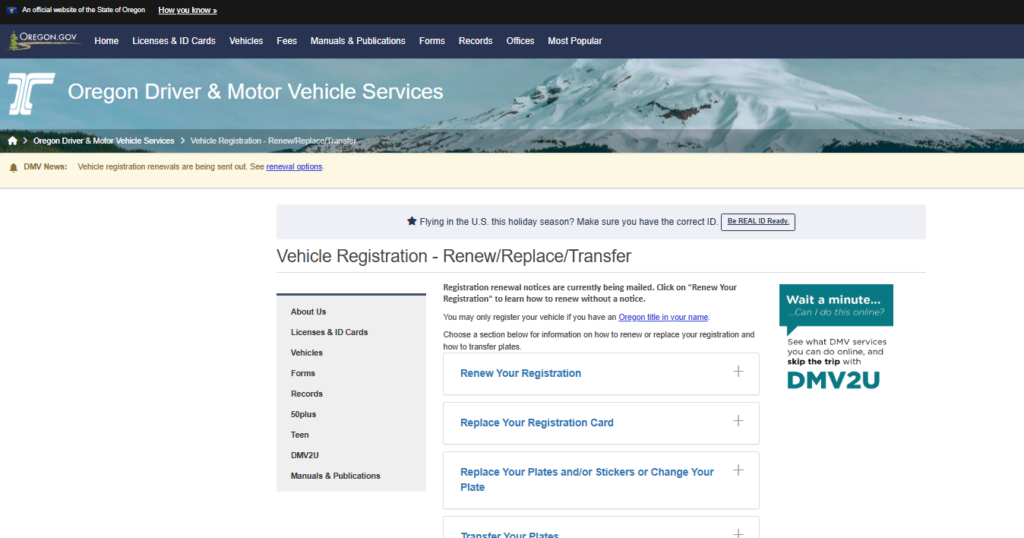
Most passenger vehicles in Oregon follow a biennial registration cycle, meaning registrations are valid for two years and expire on the same calendar date as the previous registration. The DMV sends a renewal notice approximately 60 days before the https://www.oregon.gov/odot/dmv/pages/index.aspx expiration date, which reminds vehicle owners that it is time to renew. Receiving this notice helps drivers avoid fines or penalties for expired registration, although registration can still be renewed without it, using a vehicle’s license plate number or VIN.
Vehicles that require renewal include:
- Passenger cars and light trucks
- Motorcycles and mopeds
- Trailers with a loaded weight over 1,800 pounds
- Heavy commercial vehicles
- Campers and travel trailers
Some vehicles are exempt from renewal or follow a different schedule, such as electric vehicles enrolled in the OReGO program or new vehicles within the first four years of registration. Renewal notices contain critical information about fees, required documents, and emissions testing, ensuring vehicle owners can complete the renewal process efficiently.
Fees & Costs to Renew Vehicle Registration in Oregon
Renewing a vehicle registration in Oregon involves several fees, which vary based on vehicle type, weight, and location. Understanding these costs helps drivers plan and ensures compliance with state DMV requirements. Oregon registration renewal fees https://www.oregon.gov/odot/dmv/pages/fees/vehicle.aspx cover standard passenger vehicles, electric vehicles, motorcycles, heavy vehicles, trailers, campers, farm vehicles, and optional programs like OReGO. Fees are also affected by county surcharges and special registration types.
Standard Passenger Vehicle Renewal Fees
For most Oregon drivers, passenger vehicle registration is valid for two years. Fees depend https://www.fueleconomy.gov/ on the vehicle’s fuel efficiency, measured in miles per gallon (MPG), with different rates for electric vehicles and motorcycles.
Two-Year Registration Fees (Before December 31, 2025):
| Vehicle Type | MPG | Two-Year Fee |
|---|---|---|
| Passenger Vehicles | 0–19 | $126 |
| Passenger Vehicles | 20–39 | $136 |
| Passenger Vehicles | 40+ | $156 |
| Electric Vehicles | All | $316 |
| Motorcycles / Mopeds | All | $88 |
Two-Year Registration Fees (Effective December 31, 2025):
| Vehicle Type | MPG | Two-Year Fee |
|---|---|---|
| Passenger Vehicles | 0–19 | $210 |
| Passenger Vehicles | 20–39 | $220 |
| Passenger Vehicles | 40+ | $300 |
| Electric Vehicles | All | $460 |
| Motorcycles / Mopeds | All | $172 |
New passenger vehicles with a Manufacturer’s Certificate of Origin may qualify for a four-year registration, doubling the standard two-year fees. Electric vehicles have higher fees reflecting their road usage and infrastructure support.
County Registration Fees
In addition to base fees, some counties charge extra local registration fees. These surcharges fund local transportation and road maintenance projects.
Two-Year County Fees:
- Multnomah County: $112
- Washington County: $60
- Clackamas County: $60
- All Other Counties: $0
Quarterly fees are also added for certain counties:
- Multnomah County: $14 per quarter ($56 annually)
- Washington & Clackamas Counties: $7.50 per quarter ($30 annually)
Additional Fees
Some transactions may require extra fees, depending on the vehicle or situation:
- New License Plates: $26 (applies to initial registration)
- Plate Transfer Fee: $30 (applies when moving plates to another vehicle)
These fees do not apply to every https://www.oregon.gov/odot/forms/dmv/6013.pdf renewal but must be factored in if replacing plates or transferring tags.
Heavy Motor Vehicles & Buses
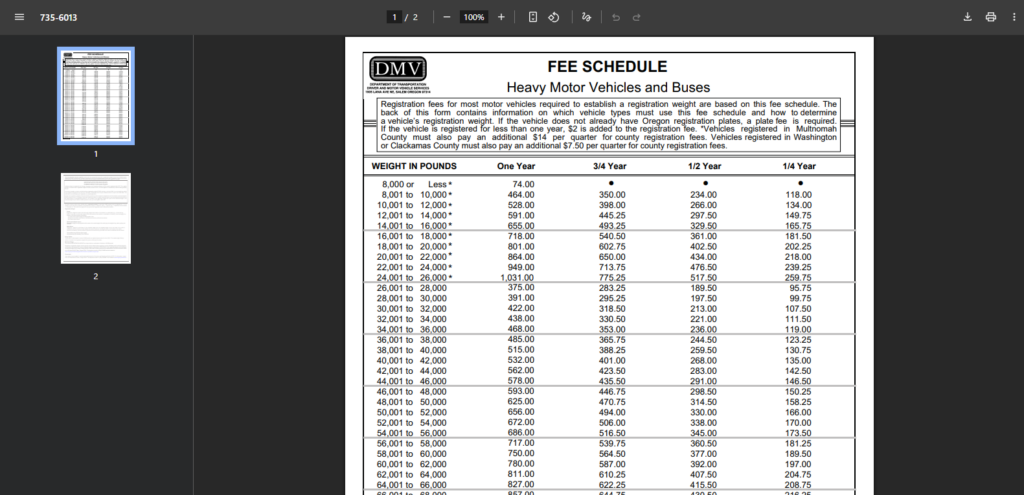
Heavy vehicles and buses are charged fees based on weight and registration period. Annual fees vary widely to reflect the road impact of heavier vehicles.
Sample Annual Fees:
| Weight (lbs) | Annual Fee |
|---|---|
| 8,001–10,000 | $464 |
| 10,001–12,000 | $528 |
| 12,001–14,000 | $591 |
| 14,001–16,000 | $655 |
| 16,001–18,000 | $718 |
| 26,001–28,000 | $375 |
| 40,001–42,000 | $925 |
| 60,001–62,000 | $1,455 |
| 80,001–82,000 | $1,879 |
Vehicles over 26,000 pounds may also incur a weight-mile tax through the Commerce and Compliance Division (CCD). For complete details, drivers can refer to Form 6013.
Camper & Travel Trailer Fees
Campers and travel trailers are charged based on overall https://www.oregon.gov/ODOT/Forms/DMV/464.pdf length. Registration fees cover two years, with fractions of a foot rounded down.
Sample Fees:
| Length | Two-Year Fee |
|---|---|
| 8–10 ft | $81 |
| 20 ft | $95 |
| 30 ft | $102 |
| 40 ft | $172 |
| 45 ft | $326 |
Farm Vehicle Fees
Farm vehicles, registered with F plates, enjoy reduced https://www.oregon.gov/ODOT/Forms/DMV/152.pdf fees based on vehicle weight. Registration can be annual or quarterly, depending on farm needs.
Sample Annual Fees:
| Weight (lbs) | Annual Fee |
|---|---|
| 8,000 or less | $50 |
| 8,001–10,000 | $65 |
| 12,001–14,000 | $97 |
| 16,001–18,000 | $129 |
| 20,001–22,000 | $162 |
| 26,001–28,000 | $204 |
Lower fees help support farmers while maintaining state registration compliance.
Trailer Fees
Light trailers (under 8,000 lbs) have changing fees based on the year:
- Before December 31, 2025: Title fee $101, two-year registration $126
- After December 31, 2025: Title fee $240, two-year registration $210
Trailers with a loaded weight under 1,800 lbs may not require registration. Heavy trailers (over 8,000 lbs) require a title ($90) and a permanent registration fee ($10). Heavy trailers must be pulled by a registered vehicle, and their weight counts toward the towing vehicle’s registration.
OReGO Road Usage Charge Program
OReGO allows drivers to pay based on miles driven https://www.oregon.gov/odot/orego/Pages/default.aspx instead of a per-gallon fuel tax. Participation is optional, with a two-year registration fee of $86.
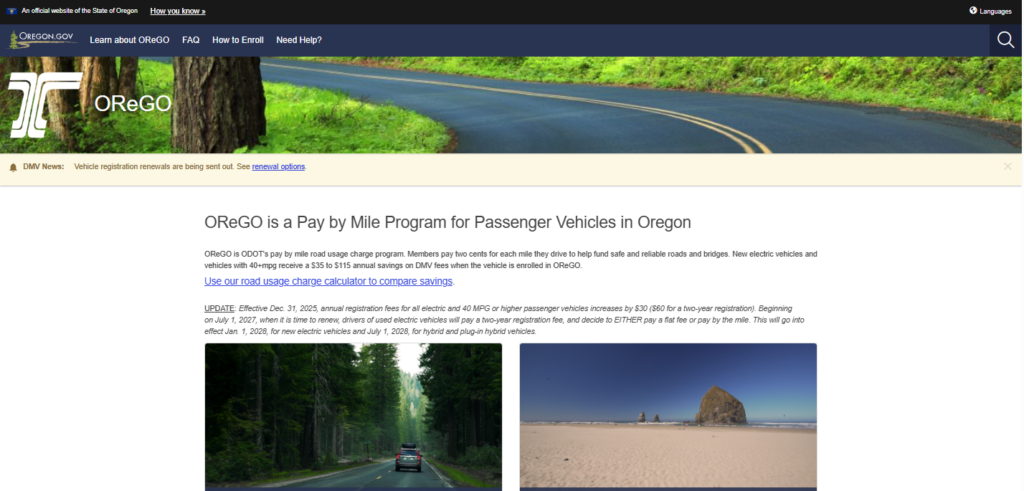
Drivers must submit proof of enrollment to the DMV. If leaving the program, the DMV bills for the full registration fee. Upcoming updates include:
- July 1, 2027: Used electric vehicle two-year fee $170
- January 1, 2028: New electric vehicles and hybrids may pay a flat fee or a mileage-based fee
- July 1, 2028: Hybrid/plug-in hybrid fee structure aligns with OReGO rules
This program helps electric vehicle owners manage registration costs while supporting fair road usage billing.
Oregon Vehicle Registration Renewal Requirements
Renewing a vehicle registration in Oregon requires proof of insurance, your vehicle’s VIN or license plate number, and completing the process before your registration expires. Whether renewing online, by mail, or in person, having the correct https://dmv2u.oregon.gov/eServices/_/ documents ready ensures a smooth and timely renewal. Oregon DMV sets clear vehicle renewal requirements to keep registrations current and maintain legal driving privileges. Every vehicle owner must have valid liability insurance that meets state minimum standards. This insurance proof confirms that drivers are financially responsible in case of accidents. DMV officials may request your insurance company name and policy number during the renewal process.
Your vehicle’s VIN or license plate number is essential for identification. These details link the registration to the correct vehicle and prevent errors or duplication. Always double-check this information against your current registration card or title. Renewals must occur before the expiration date on your current registration. Oregon sends a renewal notice approximately 60 days in advance, providing key instructions and fee details. If you lose this notice, the DMV allows you to renew using your VIN and license plate number, ensuring you can complete the process without delays.
Documents Required for Each Renewal Method
- Online Renewal (DMV2U Portal)
- Oregon driver’s license or ID
- Insurance information (company and policy number)
- Vehicle VIN or license plate number
- Payment method (credit/debit card)
- Mail Renewal
- Completed renewal notice (or VIN/plate info if notice is lost)
- Proof of insurance
- Check or money order for applicable fees
- DEQ emissions test results, if required
- In-Person at DMV Office
- Driver’s license or Oregon ID
- Proof of insurance
- Renewal notice or VIN/plate info
- DEQ emissions documentation, if applicable
- Payment for registration fees
Having these documents prepared before starting the process reduces errors and prevents delays. Vehicles requiring emissions testing must have passed their DEQ test for the DMV to process the renewal. Owners in the Portland and Medford-Ashland areas can use the DEQ VIP Boundary Lookup Tool to confirm testing requirements.
The DMV Renewal Process — Steps
Renewing a vehicle registration in Oregon can be completed through multiple convenient methods, including online, by mail, in person, or at select kiosks. Each option has specific steps, requirements, and timelines that ensure drivers stay compliant and avoid penalties. Following a structured process helps vehicle owners complete their registration efficiently while meeting Oregon DMV and DEQ requirements. The process varies slightly depending on the renewal method chosen, so understanding each option ensures a smooth experience.
Online Renewal (DMV2U Portal)
Oregon residents can renew their vehicle registration quickly using the DMV2U online portal. This method is available 24/7 and is ideal for those who want to avoid visiting a DMV office or mailing forms.
To renew online, vehicle owners need:
- Vehicle Identification Number (VIN) or license plate number
- Oregon driver’s license, permit, or ID card
- Proof of liability insurance meeting Oregon requirements
- Payment method, such as a credit or debit card
Steps online renewal process:
- Go to https://dmv2u.oregon.gov/eServices/_/ and log in or create an account.
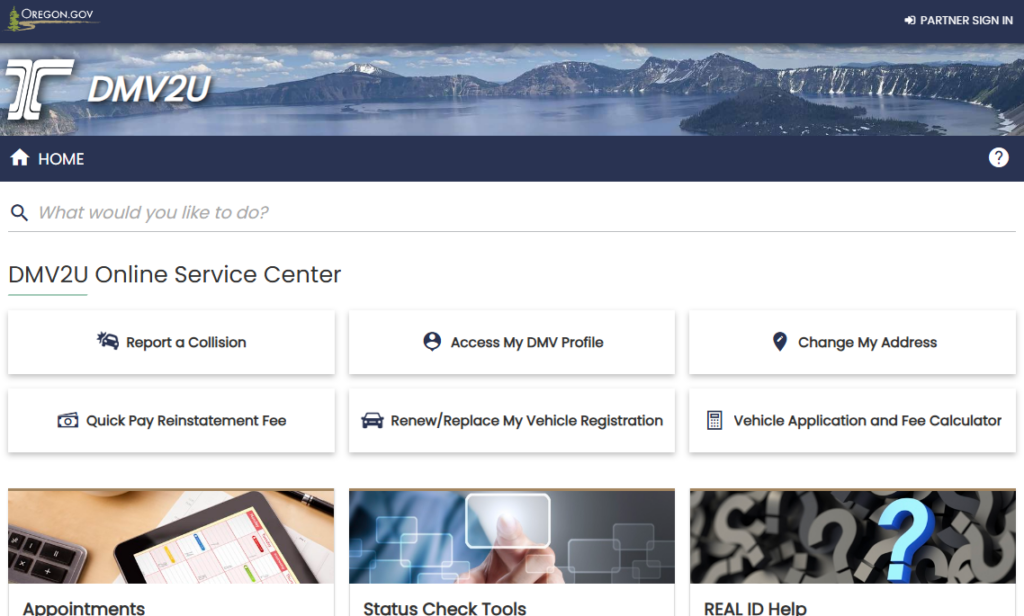
- Select “Vehicle Registration Renewal” from the menu.
- Enter your VIN or license plate number along with insurance details.
- Verify your registration period, usually two years for passenger vehicles.
- Confirm any applicable fees, including county surcharges.
- Submit payment and save the receipt; it serves as proof for 30 days.
If a renewal notice is lost, the portal still allows online renewal using your VIN and plate number, eliminating the need for a mailed form. This method also ensures emissions testing results from DEQ stations are automatically recorded if required.
Benefits of online renewal:
- Fast and convenient
- Avoids DMV office wait times
- Immediate confirmation of payment
- Integration with DEQ emissions testing results
Renew by Mail
Renewing by mail is another option for Oregon residents who prefer not to use the DMV2U portal. This method requires completing the renewal notice form and sending it along with payment.
Steps for mail-in renewal:
- Fill out the renewal notice, including personal details, VIN/plate number, and insurance information.
- Include a check or money order for the total fees.
- If the vehicle requires an emissions test, attach proof of a passed DEQ inspection.
- Mail the documents to the address indicated on the renewal notice.
Mail-in renewal allows drivers to complete the process without visiting a DMV office, but it may take longer to receive confirmation and the new registration card.
In‑Person Renewal at DMV
Renewing at a DMV office is ideal for those who want direct assistance or need to resolve special circumstances. Drivers should bring:
- Oregon driver’s license, permit, or ID card
- Proof of current insurance
- DEQ emissions test results (if applicable)
- Payment for registration and county fees
During the visit, DMV staff will verify documents, process payment, and issue either a temporary registration or a confirmation receipt. Most offices allow appointments via DMV2U, though walk-ins may be accepted on a standby basis.
Oregon DMV Express Kiosk Renewal
Oregon DMV Express Kiosks are available at select locations, including some retail and government facilities, for quick registration renewal. Kiosks provide instant processing for standard passenger vehicles, usually in under two minutes.
How to use a kiosk:
- Enter vehicle plate number or VIN
- Confirm insurance coverage
- Pay registration fees using a credit or debit card
- Receive a printed temporary registration receipt immediately
Restrictions and requirements:
- Only standard passenger vehicles can renew at kiosks
- DEQ emissions testing must be completed beforehand if required
- County-specific fees may apply and are automatically included
Benefits:
- Fastest renewal method for eligible vehicles
- No need to interact with DMV staff
- Receipts are valid immediately, providing proof of registration
DEQ Emissions Inspection & Renewal
Certain areas in Oregon require emissions testing for https://www.oregon.gov/deq/Vehicle-Inspection/Pages/Testing-Boundaries.aspx vehicle registration renewal, including the Portland Metro and Medford‑Ashland regions. DEQ inspections ensure vehicles meet environmental standards before registration is completed.
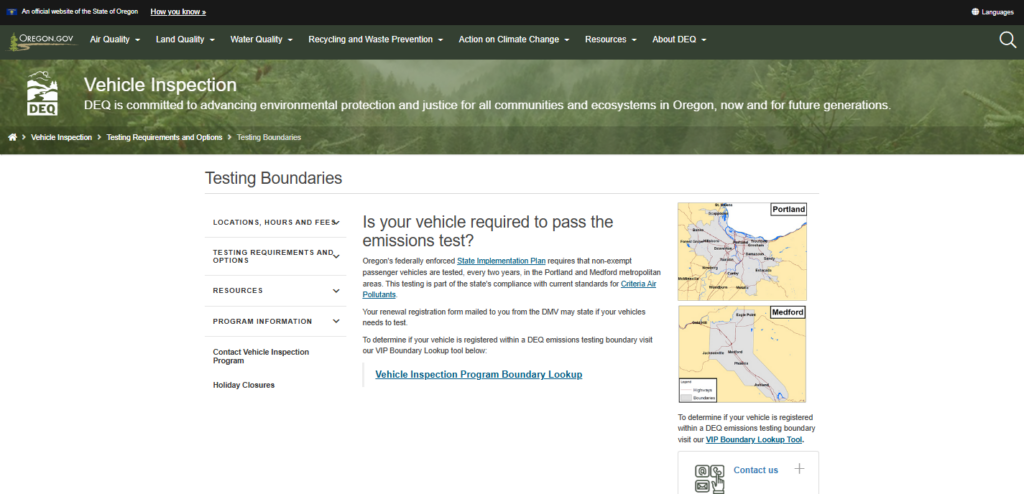
How to check if your car needs DEQ testing:
- Use the DEQ VIP Boundary Lookup Tool online by entering your address
- Vehicles four years or older in testing areas typically require inspection
Steps to combine emissions testing and registration renewal:
- Pass the DEQ emissions test at an authorized Clean Air Station or participating repair facility.
- Ensure results are electronically submitted to the DMV or bring the test receipt for in-person/mail renewals.
- Complete registration via your chosen method (online, mail, kiosk, or in-person)
Vehicles that pass testing are cleared for renewal without additional delays. Electric vehicles, motorcycles, and vehicles outside DEQ boundaries are usually exempt from emissions inspections.
Timing, Deadlines & Grace Periods
Vehicle registration in Oregon should be renewed before the expiration date to avoid penalties. Drivers can start the renewal process about 60 days before their registration expires, giving ample time to complete all requirements. Renewing early helps prevent lapses that could lead to late renewal penalties or legal issues. Oregon uses a biennial registration system for most passenger vehicles, meaning registrations expire every two years on the same calendar date. DMV renewal notices are usually mailed about two months before expiration, providing a clear renewal timeline for vehicle owners.
When to Renew
- 60 days before expiration: The Oregon DMV encourages initiating renewal as soon as the notice arrives.
- Lost notice: Renewal can still be completed online or in person using the vehicle’s VIN or license plate number.
- New residents: Oregon law requires registering vehicles within 30 days of establishing residency.
Late Renewal and Penalties
While Oregon does not charge a late fee for registration renewal, driving with expired tags is a Class D traffic violation. Fines depend on how long the registration has been expired:
| Days Expired | Fine Amount |
|---|---|
| 0–90 days | $70 |
| 91+ days | $145 |
Law enforcement may issue citations if a vehicle is stopped with expired registration. Keeping registration current ensures legal compliance and avoids unnecessary fines or court involvement.
What Happens If You Don’t Renew or Lose Your Renewal Notice
If a vehicle registration in Oregon is not renewed, driving with expired tags can result in a Class D traffic violation with fines ranging from $70 to $145, depending on how long the registration has been expired. Losing a renewal notice does not prevent vehicle owners from completing the process; registration can still be renewed online using the VIN and license plate number. Driving with expired registration can have serious consequences. Oregon law considers operating a vehicle with expired tags illegal, and law enforcement may issue fines or citations. Specifically:
- 0–90 days expired: Fine of $70
- 91+ days expired: Fine of $145
Vehicle owners who have misplaced their renewal notice can still proceed without it. The Oregon DMV allows online renewal by entering the VIN and plate number, along with proof of insurance. This ensures that the process remains smooth even if the mailed notice is unavailable.
Other ways to renew without notice include:
- In-person renewal: Bring the vehicle’s VIN, license plate, and proof of insurance to a DMV office.
- Mail renewal: Fill out a new registration form and include payment. DEQ test results, if applicable, must also be submitted.
It is recommended to check the expiration date in advance and renew promptly to avoid penalties. Using the DMV2U portal or in-person methods ensures the vehicle remains legally registered.
FAQs About Renew Vehicle Registration
When renewing a vehicle registration in Oregon, many drivers have common questions about the process, required documents, costs, and deadlines. This FAQ section answers the most frequent queries to help make renewal smooth and stress-free.
How do I renew my vehicle registration in Oregon?
Vehicle registration in Oregon can be renewed online, by mail, or in person at a DMV office. Drivers must provide necessary documents, pay the fees, and, if required, complete an emissions test. Renewal is often easiest through the DMV2U online portal, where users can log in, enter their vehicle information, verify insurance, and submit payment. Mail-in renewals require the completed renewal notice, payment by check or money order, and proof of emissions compliance if applicable. In-person renewal is available at local DMV offices or Express Kiosks, which process standard renewals in minutes. Using the DMV2U portal or kiosks helps avoid long waits and ensures that registration is processed quickly.
What documents do I need?
To renew registration, Oregon drivers must present proof of insurance, the vehicle’s license plate number or VIN, and a driver’s license or state ID. For online renewals, insurance details and the renewal notice (if available) are required. In-person and mail renewals also need payment for fees and, in certain areas, a completed DEQ emissions test certificate. Drivers without a renewal notice can still renew by providing the VIN and plate number. Keeping all documents updated ensures a smooth process and avoids delays or rejection of renewal requests.
Can I renew after expiration?
Yes, Oregon allows renewal after registration expires, but vehicles cannot be legally driven until registration is current. There is no late fee for most expired registrations, but driving with expired tags is a Class D traffic violation, with fines starting at $70 for 0–90 days and $145 for over 90 days. Renewing quickly after expiration minimizes the risk of penalties and ensures compliance with Oregon law. Online renewal is available even after expiration, making it convenient for those who miss the initial deadline.
Do I need an emissions test to renew?
An emissions test is required only for vehicles registered in certain areas, like the Portland metro and Medford‑Ashland. Gasoline-powered cars, light-duty trucks (1975+), and certain diesel vehicles must pass DEQ testing unless they are new, electric, motorcycles, or outside testing boundaries. The DEQ Clean Air Stations or DEQ Too program submits results electronically to DMV. If a vehicle requires testing, renewal cannot be completed online without a passing emissions certificate. This ensures all vehicles meet Oregon air quality standards.
How much does renewal cost?
Renewal fees vary by vehicle type, MPG rating, and county, with most passenger vehicles using a two-year registration cycle. For example, standard passenger vehicles range from $210–$300 for two years, while electric vehicles cost $460. Local county fees are added separately: Multnomah County charges $112, Washington charges $60, and Clackamas $60. Additional costs may include new plates, plate transfers, or emissions testing fees. Using the DMV2U portal, drivers can view exact fees based on their vehicle and county before submitting payment.