Oregon driver’s licenses and ID cards are official, state-issued credentials that establish identity and legal driving authority. The Oregon DMV issues these documents to residents after verifying eligibility, documentation, and residency status. Both Oregon driver’s licenses and DMV ID Oregon cards incorporate secure features to prevent fraud, protect personal data, and comply with federal and state identification regulations. These credentials serve multiple purposes, including operating motor vehicles, confirming age for regulated activities, and verifying identity for financial or governmental transactions. Each license or ID reflects specific classifications, endorsements, and expiration standards, ensuring alignment with legal requirements.
These documents provide reliable proof of identity across public, private, and institutional contexts. The DMV outlines step-by-step procedures for applying, renewing, or replacing Oregon driver licenses & ID cards, including Real ID options that meet federal standards for travel and identification. State-issued IDs enhance accountability, safeguard against unauthorized use, and facilitate access to essential services. Residents can also utilize tools like the Oregon License Plate Search to verify vehicle registration or track plate information efficiently. Users benefit from clear instructions regarding required documentation, eligibility criteria, and license classes. Residents relying on Oregon driver licenses & ID cards gain not only legal driving privileges but also a versatile form of identification recognized nationwide.
Types of Oregon Driver Licenses & ID Cards
Oregon offers several types of driver’s licenses and state ID cards to meet different driving and identification needs. Each type serves a specific purpose, whether for learning to drive, commercial driving, or official identification.
Driver Licenses
Oregon provides a variety of driver’s licenses depending on age, driving experience, and vehicle type. These licenses ensure that drivers meet safety standards and legal requirements.
Class C License
The Class C license is the most common Oregon driver’s license. It allows holders to operate standard passenger vehicles, including cars, small trucks, and vans. Applicants must pass both written and driving tests and maintain valid liability insurance. Class C licenses can include endorsements for trailers or other specialized vehicles.
Class C Instruction Permit
Driver permits in Oregon are for new drivers learning to operate a vehicle. Typically issued to teens or first-time drivers, the permit allows supervised driving with a licensed adult. Holders must follow restrictions, including no late-night driving and passenger limits. This permit prepares drivers for the Class C license and ensures they gain experience safely.
Provisional Licenses
Provisional licenses are for youth under 18 who have completed the driver education program. They come with temporary restrictions such as passenger limits and restricted nighttime driving. After a probation period, provisional licenses automatically convert to standard Class C licenses, allowing full driving privileges.
Commercial Driver Licenses
Commercial driver’s licenses (CDLs) are required for operating large vehicles, including trucks, buses, and vehicles carrying hazardous materials. Oregon CDLs have classes and endorsements that indicate the type of vehicle or cargo a driver can operate. Applicants must pass specialized knowledge and skills tests to ensure safety on the road.
Oregon ID Cards
Oregon also issues state ID cards for residents who do not drive. These cards serve as official proof of identity for legal, financial, and travel purposes.
Standard ID Cards (Non‑Driver)
Standard ID cards allow residents to carry a state-issued identity document without obtaining a driver’s license. These IDs include the holder’s photo, name, date of birth, and address, and are valid for official transactions requiring proof of age or identity.
REAL ID vs Non‑REAL ID Cards
Oregon offers both REAL ID and non‑REAL ID cards. REAL IDs feature a gold star in the top right corner and comply with federal regulations, allowing domestic air travel and federal facility access. Non‑REAL ID cards are valid for state purposes but cannot be used for federal identification requirements.
Sample Description of Card Layouts:
- REAL ID: Gold star, holder photo, signature, and card number.
- Non‑REAL ID: Standard layout with holder photo, signature, and card number.
These ID cards provide flexibility for residents who need official identification without driving. They are accepted for age verification, banking, and many legal transactions.
Online Tools & DMV2U Services
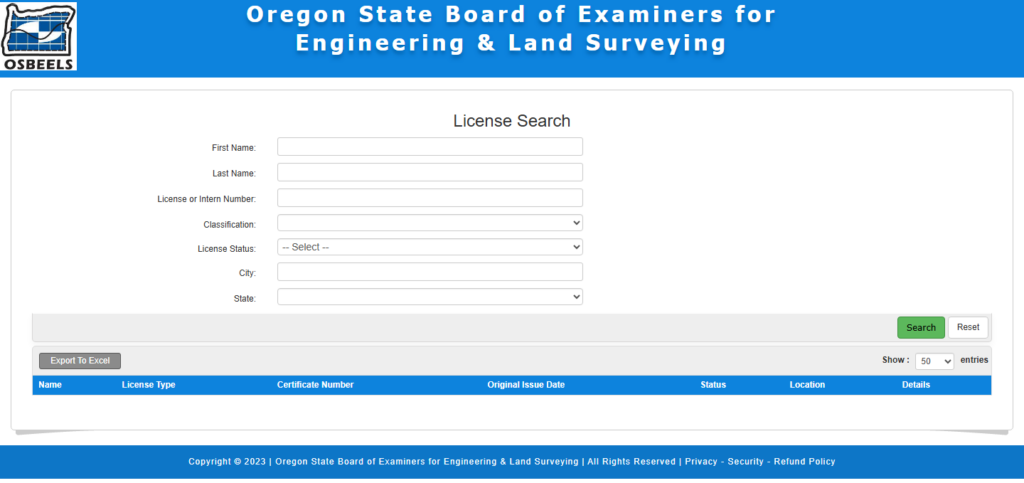
Oregon residents can complete many DMV transactions online using DMV2U, including renewing or replacing a license or ID. The platform also allows users to update personal details and schedule in-person appointments efficiently. DMV2U provides convenient https://online.myosbeels.org/#/verifylicense online DMV services for a range of tasks, saving time and reducing the need for trips to a DMV office. Users can renew a driver’s license or ID, request a replacement for a lost or stolen card, and update their address directly on the platform. This ensures that records stay current without long waits.
Key DMV2U services include:
- License or ID Renewal: Quick processing for standard renewals.
- Replacement Requests: Report lost, stolen, or damaged cards and get a replacement mailed.
- Address Changes: Update mailing or residential address to maintain valid records.
- Appointment Scheduling: Book DMV visits for tests, document verification, or photo capture.
Scheduling an appointment online helps reduce wait times and allows users to choose a convenient date and location. The DMV2U system sends reminders and confirms bookings, making the process straightforward. For users who prefer digital solutions, DMV2U also supports fee payments, document uploads, and status tracking. These features reduce errors and ensure transactions complete smoothly. Many residents report completing renewals and updates in just a few minutes without leaving home.
REAL ID vs Standard Licenses
A REAL ID is a federally compliant form of identification that meets stricter security standards, while a standard Oregon driver’s license or ID card serves as a state-issued ID for everyday use. REAL IDs are required for boarding domestic flights and entering federal buildings.
What is a REAL ID?
A REAL ID is a state-issued identification card that follows federal security requirements set by the Department of Homeland Security. It includes enhanced verification measures to prevent identity fraud, such as stricter document checks when applying. In Oregon, a REAL ID can be added to a driver’s license or ID card at the DMV by presenting proof of identity, Social Security number, and residency.
Key features of a REAL ID:
- Has a star marking on the top right corner.
- Meets federal identification standards for air travel and federal facility entry.
- Can also function as a standard license for driving and age verification.
When a REAL ID is Required
A REAL ID becomes mandatory in specific situations:
- Boarding federally regulated commercial flights within the U.S.
- Entering federal facilities or military bases.
- Certain nuclear power plants and other secure federal sites.
For everyday activities like driving, shopping, or voting, a standard license or ID card works just fine.
Standard vs REAL ID: What to Choose
Standard Oregon ID or License
- Used for driving, verifying age, and general identification.
- Quick to obtain and sufficient for most state-level needs.
- Lower documentation requirements.
REAL ID Oregon License/ID
- Necessary for federal travel and facility access.
- Offers added verification against identity fraud.
- Requires more documentation and DMV visits.
Pros and Cons Table:
| Feature | Standard License/ID | REAL ID |
|---|---|---|
| Federal air travel | ❌ | ✅ |
| Federal building access | ❌ | ✅ |
| Basic driving and ID | ✅ | ✅ |
| Application documentation | Minimal | Extensive |
| Valid for state use | ✅ | ✅ |
Eligibility & Documentation Requirements
Oregon residents must meet age, residency, and lawful presence requirements to get a driver’s license or ID card. Applicants also need specific documents proving identity, address, and Social Security status.
Eligibility Requirements
To apply for an Oregon driver’s license or ID card, the applicant must be a resident of the state. Residents include people who live, work, or have established a home in Oregon. Applicants must also meet the age requirement, which is 16 years or older for standard licenses. Lawful presence in the U.S. is mandatory, meaning applicants must provide evidence of citizenship or legal immigration status.
Key Eligibility Criteria:
- Age: Minimum 16 years for a driver’s license; 15 for an instruction permit
- Residency: Must be a current Oregon resident
- Lawful Status: U.S. citizen or legally authorized to reside in the U.S.
- Other Requirements: Applicants under 18 must have parental consent
Meeting these criteria ensures the DMV can process the license or ID efficiently and reduces delays caused by incomplete applications.
Required Documents Checklist
Applicants need original or certified documents to prove identity, residence, Social Security number, and lawful status. Oregon DMV strictly verifies all submissions.
Document Checklist:
| Category | Acceptable Documents | Notes |
|---|---|---|
| Identity | Birth certificate, valid passport, or certificate of citizenship | Must be original or certified copies |
| Proof of Residence | Utility bill, rental agreement, Oregon driver license, or bank statement | Must show current Oregon address |
| Social Security | Social Security card, W-2, or pay stub with full SSN | If ineligible for SSN, provide SSA denial letter |
| Lawful Status | U.S. passport, permanent resident card, or employment authorization | Required for non-citizens |
Steps: How to Apply for a License or ID
Applying for an Oregon driver’s license or ID card requires completing tests, submitting documents, and paying the required fees. The process varies depending on whether it’s a first-time license, an instruction permit, or a provisional/commercial permit.
First-Time License/ID
First-Time Driver License applicants can apply either by scheduling an appointment online or visiting a DMV office for standby service. While appointments help reduce waiting times, walk-ins are accepted at most locations but may involve longer waits. Applicants must complete a knowledge test and a vision test. The knowledge test evaluates understanding of traffic laws, road signs, and safe driving practices, while the vision test ensures that applicants meet minimum eyesight requirements to drive safely. Many applicants use practice tests available on DMV2U to prepare for the knowledge portion. Once testing is complete, a photo will be captured for the license or ID, and the applicant pays the applicable fees. Current fees vary depending on age and type of ID, typically ranging from $16 to $68, with payment accepted via card, cash, or check. For those obtaining a First-Time Driver License, additional instructions may apply, including parental consent for applicants under 18 and temporary permits issued before the full license. Understanding the complete process in advance can help first-time drivers navigate DMV procedures more efficiently and avoid common delays.
Steps summary for first-time applicants:
- Schedule an appointment or go to the DMV for standby service.
- Bring proof of identity, residency, and Social Security number.
- Complete knowledge and vision tests.
- Capture a photo for the card.
- Pay the applicable fees.
- Receive a temporary document while the official license or ID is mailed.
Instruction Permit Process
Applicants under 18 or those practicing driving must obtain an instruction permit before a full license. The process includes passing the knowledge and vision tests, submitting identification documents, and paying the permit fee. Instruction permits allow supervised driving only. Drivers must log required practice hours before qualifying for a provisional license. Using DMV2U to schedule tests or review study materials can streamline the process and ensure readiness for the road.
Provisional & Commercial Permits
Provisional licenses are for drivers under 18 who have completed the instruction permit phase and met driving hour requirements. These licenses limit passengers and nighttime driving to ensure safety.
Commercial driver permits (CDL) require additional steps:
- Completion of a commercial knowledge test.
- Medical certification confirming fitness to operate larger vehicles.
- Fees vary based on the vehicle class.
Both provisional and commercial permit applicants must follow all DMV services regulations, including updated documentation and insurance verification. Scheduling through DMV2U often reduces wait times and ensures test availability.
Renewals & Replacements
Oregon residents can renew or replace their driver’s license or ID card online or at a DMV office. If a card is lost, stolen, or expired, the state provides clear steps to obtain a new one quickly.
Renewal Eligibility and Process
To renew a driver’s license or DMV ID in Oregon, the cardholder must meet certain eligibility criteria. Residents can renew online if their information is current, they hold a standard license, and their previous renewal was completed in person at least once. Renewal in-office is available for all residents, including those with expired cards, changes in personal information, or special endorsements.
Key points for renewal:
- Online renewals often process immediately, and a new card is mailed within 7–10 business days.
- In-office renewals may provide an interim card for immediate use until the mailed card arrives.
- Expired cards can still be renewed, though additional documentation may be required.
Transitioning between renewal methods is straightforward. Residents who prefer online convenience can check DMV eligibility using their current card number and personal details, while those visiting the office can handle complex cases like medical restrictions or name changes.
Replacing Lost or Stolen Cards
If a card is lost or stolen, Oregon law allows residents to request a replacement quickly. Replacement cards require proof of identity, such as a birth certificate, passport, or another valid form of ID. Reporting a stolen card promptly reduces the risk of identity misuse.
Replacement steps:
- Complete the replacement form on the DMV website or at a local office.
- Provide identification documents and pay the replacement fee.
- Receive an interim card immediately (if in-office), valid until the permanent card is mailed.
- Permanent cards usually arrive by mail within 7–10 business days.
Interim Cards and Mail Timeline
An interim card serves as a temporarily valid license while the permanent card is processed. It is especially useful for residents who need to drive immediately or provide ID for work or travel. Mailed cards are printed with secure features and typically arrive within one to two weeks. Keeping the mailing address current ensures prompt delivery.
Fees & Processing Times
Oregon driver’s licenses and ID cards come with specific fees that vary by type, and processing times depend on whether services are completed in person or by mail. Understanding the cost and expected wait helps applicants plan efficiently. Fees for driver licenses, REAL IDs, ID cards, instruction permits, and commercial licenses are set by the Oregon DMV and are collected at the time of application. Most standard applications are processed immediately at DMV offices, while mailed items may take several weeks to arrive.
Fee Schedule for Oregon Driver Licenses & ID Cards
| Type of Document | Fee | Notes | Typical Processing Time |
|---|---|---|---|
| REAL ID Driver’s License | $60 | Valid for 8 years | Immediate at the office; 2–4 weeks by mail |
| Immediate at the office; 2–4 weeks by mail if mailed | $60 | Compliant with federal REAL ID requirements | Immediate at the office; 2–4 weeks by mail |
| Identification Card (ID) | $28 | Valid for 8 years | Issued same day at the DMV office |
| Instruction Permit | $26 | Required for new drivers under 18 | Immediate at the office; 2–4 weeks for mailed documents |
| Commercial Driver License (CDL) | $89–$125 | Fees vary by class and endorsements | Immediate at office; 2–4 weeks for mailed documents |
Key Notes on Fees and Processing
- Office Visits: Most standard licenses and IDs are issued at the DMV counter immediately after completing the application, passing the required tests, and paying fees.
- Mail Delivery: If documents are mailed, processing generally takes 2–4 weeks, depending on the type of license or ID.
- Payment Options: Cash, credit/debit cards, and checks are accepted at DMV locations. Some online renewals may allow card payments.
- Cost Breakdown: Fees include both administrative processing and license issuance. REAL ID fees do not exceed standard license costs.
This breakdown ensures applicants understand DMV charges and can anticipate the time and cost involved for obtaining any Oregon driver’s license or ID card. Planning avoids delays and ensures compliance with state requirements.
(FAQ) About the Driver’s License and ID Card
Yes, many Oregon driver’s license and ID card services can be started online through DMV2U. Non-citizens can apply for certain licenses, and all residents must update their address promptly if they move.
Can I Apply Online?
Oregon residents can start many driver’s license and ID card services online through DMV2U, the state’s official DMV portal. Online applications allow users to renew or replace a license, update personal details, and pay applicable fees without visiting a DMV office. However, first-time applicants or those needing vision tests must visit a local office to complete in-person requirements, ensuring all identity and eligibility checks are satisfied.
Do I Need a REAL ID?
A REAL ID is required for boarding domestic flights and accessing federal facilities. Oregon residents can choose between a standard license and a REAL ID when applying. To obtain a REAL ID, applicants must provide documents proving identity, Social Security number, and Oregon residency, while those who opt for a standard ID can continue driving and using state services but will need a passport for federal travel.
What If I Move?
Oregon law requires residents to update their address with the DMV within 30 days of moving. This ensures that licenses, ID cards, and vehicle registrations remain accurate and prevents missed notifications about renewals or official correspondence. Address updates can be completed online through DMV2U or in person at a DMV office, making it easier for residents to stay compliant with state requirements.
How Long Before My License Arrives?
After completing an application, Oregon driver’s licenses and ID cards are generally mailed within 7–10 business days. Processing time can vary for online renewals or replacements depending on the postal service, and residents are encouraged to keep temporary documents or receipts as proof of identification until the new card arrives. Expedited services may be available at select DMV locations.
Can Non-Citizens Get a License?
Certain non-citizens are eligible to obtain an Oregon driver’s license if they provide valid immigration documents, such as visas, work authorizations, or permanent resident cards. Non-citizen applicants must meet the same testing requirements as citizens, including written and road exams, and may receive either a standard or REAL ID license depending on their documentation and immigration status.