Registering a vehicle from another state in Oregon requires timely action and accurate planning. New residents must complete out-of-state registration in Oregon within 30 days to avoid non-resident fees and legal penalties. The total cost includes state registration, titling charges, VIN inspection fees, and county-specific vehicle transfer fees, which differ based on the vehicle’s fuel efficiency, type, and model year. Electric vehicles and high-efficiency hybrids often have higher registration fees, while motorcycles and mopeds incur lower charges. Early registration helps prevent fines and ensures smooth compliance with Oregon laws.
The Oregon DMV oversees all vehicle registration and title transfers for out-of-state cars, including the issuance of an Oregon License Plate once all requirements are met. Vehicles purchased outside Oregon may also be subject to a vehicle use tax, calculated at 0.5% of the retail value, along with emissions testing in designated areas such as Portland and Medford. Completing a VIN inspection helps verify that the vehicle identification number matches the title records, which is necessary before an Oregon License Plate can be assigned and registration delays are avoided. County registration fees vary and may increase the total cost for residents of Multnomah, Washington, or Clackamas counties. Understanding each step of the DMV transfer process allows new residents to budget accurately and ensures the vehicle complies with all legal and safety requirements before being driven on Oregon roads.
Who Needs Out-of-State Vehicle Registration in Oregon
Any person moving to Oregon from another state must register their vehicle within 30 days of establishing residency. This includes new residents, students relocating for school, military personnel stationed in Oregon, and even temporary https://www.oregon.gov/odot/dmv/pages/index.aspx residents who plan to stay long-term. New residents registering an out-of-state vehicle in Oregon follow the DMV transfer process, which ensures the car meets state requirements and all necessary fees are paid. Out-of-state registration in Oregon applies to vehicles previously registered in another state, including neighbouring states like California, Washington, or Idaho. Residency requirements trigger registration obligations, and failure to comply may result in non-resident fees or fines.
Specifically, the following groups need to complete out-of-state registration in Oregon:
- New movers: Anyone relocating from a different state must register their vehicle promptly. For example, a family moving from Los Angeles to Portland must title and register their car at the local DMV.
- College students: Students who bring a vehicle from out of state for school must register it if they become Oregon residents for tuition or legal purposes.
- Military personnel: Active-duty members stationed in Oregon must update registration if the car will be used locally, even if it’s temporarily on base.
- Temporary residents planning extended stays: Those living in Oregon for several months for work or extended visits may need registration, depending on residency definitions.
Oregon’s DMV provides clear steps to complete this process, including submitting https://oregon.public.law/statutes/ors_chapter_803 an out-of-state title, proof of identity, and payment of applicable vehicle transfer fees. Residents should also prepare for VIN inspections and potential county-specific registration fees.
Base Registration and Title Fees
Registering a vehicle from out of state in Oregon requires paying both state registration and title fees. These costs vary depending on the type of vehicle, fuel efficiency, and whether the vehicle is eligible for a two-year or four-year registration. Oregon calculates registration fees https://www.oregon.gov/odot/dmv/pages/fees/vehicle.aspx primarily based on vehicle fuel efficiency, with separate considerations for electric vehicles, motorcycles, and mopeds. In addition to state charges, titling fees and optional county fees apply. Understanding these costs helps new residents budget for their DMV appointment and ensures a smooth DMV transfer process.
Two-Year Registration Fees
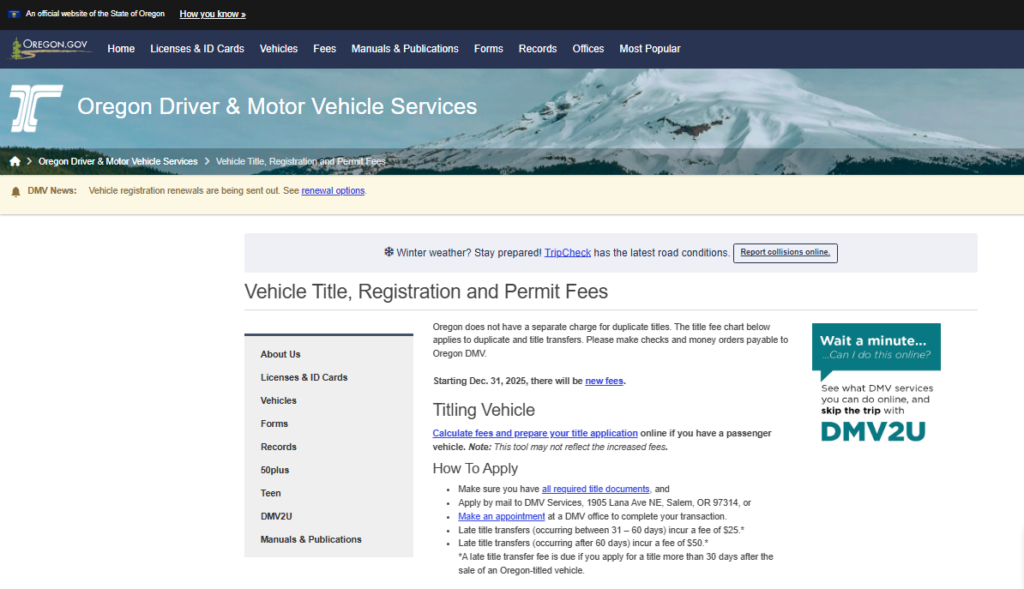
Two-year registration fees in Oregon are determined by the combined fuel efficiency rating of passenger vehicles, as well as vehicle type. The table below shows the current fees effective through December 30, 2025, along with updated fees effective December 31, 2025.
| Vehicle Type / Fuel Efficiency | Registration Fee (Through Dec 30, 2025) | Registration Fee (Effective Dec 31, 2025) |
|---|---|---|
| 0–19 MPG | $126 | $210 |
| 20–39 MPG | $136 | $220 |
| 40+ MPG | $156 | $300 |
| All-electric vehicles | $316 | $460 |
| Motorcycles and mopeds | $88 | $172 |
These fees are classified as registration charges and are a core part of the vehicle transfer fees when moving a car from another state. Vehicles that are brand-new with a manufacturer’s certificate of origin can qualify for a four-year registration, which equals twice the two-year registration plus any applicable county fees.
Title Fees
Oregon requires all vehicles to be titled when registered, and title fees vary based on the vehicle type and fuel efficiency. These titling charges are separate from registration fees but are collected during the same DMV appointment.
| Vehicle Type / Fuel Efficiency | Title Fee (Effective Dec 31, 2025) |
|---|---|
| 0–19 MPG | $240 |
| 20–39 MPG | $245 |
| 40+ MPG | $255 |
| All-electric vehicles | $331 |
These vehicle title transfer Oregon fees apply to every out-of-state vehicle, regardless of age. The title process also verifies vehicle ownership and ensures the vehicle meets all legal requirements, making it a critical step in the DMV transfer process.
Additional Registration Charges
Beyond the standard registration and title fees, out-of-state vehicles may face additional costs. These include:
- VIN Inspection Fee: $9 for verification of the vehicle identification number.
- New License Plates: $26 for a standard passenger vehicle.
- Plate Transfer to Another Vehicle: $30 when moving plates between vehicles.
These fees are collected at the time of registration and ensure compliance with state regulations. Paying these additional charges completes the DMV transfer process and allows the vehicle to be legally driven in Oregon.
County Registration Fees
County registration fees in Oregon vary depending on where a vehicle is registered. Each county adds its own charges on top of the standard state registration fees, impacting the total cost for residents. When registering a vehicle in Oregon, the county registration fees are collected along with state fees at the DMV. These fees fund local road maintenance and other transportation services. While state registration costs are consistent across Oregon, county fees differ, so out-of-state residents should check the exact charges for their new county. This ensures they can budget accurately for the total cost of registration.
Here is a breakdown of major county registration fees in Oregon:
| County | Two-Year Registration Fee |
|---|---|
| Multnomah County | $112.00 |
| Washington County | $60.00 |
| Clackamas County | $60.00 |
These fees are in addition to state registration fees, title fees, and any vehicle transfer charges. For example, registering a standard passenger vehicle in Multnomah County will include both the state fee and the $112 county charge, making the total higher than in counties with lower fees.
Key points about county fees:
- They are mandatory and collected by the DMV during registration.
- Fees can differ significantly between counties, so checking before scheduling a DMV visit saves time and surprises.
- Counties like Multnomah, with larger populations and more infrastructure projects, typically have higher fees than smaller counties.
County fees are a vital part of the vehicle registration process in Oregon. Along with DMV transfer steps, title fees, and state taxes, these charges determine the final cost for registering an out-of-state vehicle. By factoring in county fees early, new residents can plan a smooth registration experience without unexpected expenses.
How Much Will It Really Cost?
Registering an out-of-state vehicle in Oregon can vary widely depending on the type of vehicle and applicable fees. On average, total costs include state registration, county fees, title charges, VIN inspection, emissions testing, and use taxes. To make it clear, here are practical examples showing what residents might pay when bringing different types of vehicles into Oregon. These examples combine vehicle transfer fees, titling charges, and other mandatory costs to provide realistic figures.
Gas-Powered Passenger Car
A standard gas car with 25 MPG fuel efficiency, being registered in Multnomah County,y would incur the following costs:
| Fee Type | Amount |
|---|---|
| State registration (2-year) | $136.00 |
| Title fee | $245.00 |
| County registration fee | $112.00 |
| VIN inspection | $9.00 |
| Emissions testing (Portland area) | $25.00 |
| Vehicle use tax (0.5% of $20,000 retail price) | $100.00 |
| Total | $627.00 |
This example illustrates the full scope of out-of-state registration in Oregon. Each component, from the title fee to emissions costs, contributes to the overall cost. Residents moving from other states should budget for both mandatory state charges and county-specific fees.
Hybrid Vehicle
A hybrid vehicle with 40 MPG registered in Washington County would include:
| Fee Type | Amount |
|---|---|
| State registration (2-year) | $156.00 |
| Title fee | $255.00 |
| County registration fee | $60.00 |
| VIN inspection | $9.00 |
| Emissions testing (Portland area) | $25.00 |
| Vehicle use tax (0.5% of $25,000 retail price) | $125.00 |
| Total | $630.00 |
Hybrid cars often fall into higher fuel-efficiency categories, which affects state registration charges. Including titling charges and vehicle transfer fees ensures the estimate is accurate.
All-Electric Vehicle
Electric vehicles have higher registration fees but are exempt from fuel-related emissions testing in Oregon:
| Fee Type | Amount |
|---|---|
| State registration (2-year) | $316.00 |
| Title fee | $331.00 |
| County registration fee | $60.00 |
| VIN inspection | $9.00 |
| Emissions testing | $0.00 |
| Vehicle use tax (0.5% of $40,000 retail price) | $200.00 |
| Total | $916.00 |
For all-electric vehicles, the higher state registration and title fees are the primary contributors to cost. Since emissions testing is not required, the process is slightly simpler.
Motorcycle
A standard motorcycle registered in Clackamas County demonstrates lower overall costs:
| Fee Type | Amount |
|---|---|
| State registration (2-year) | $88.00 |
| Title fee | $245.00 |
| County registration fee | $60.00 |
| VIN inspection | $9.00 |
| Emissions testing | $0.00 |
| Vehicle use tax (0.5% of $10,000 retail price) | $50.00 |
| Total | $452.00 |
Motorcycles have lower registration fees and typically do not require emissions testing, making them the most affordable out-of-state registration option.
Vehicle Privilege and Use Taxes for Out-of-State Vehicles
Oregon applies two types of taxes on vehicle transactions: a vehicle privilege tax for dealer purchases and a use tax for cars brought from out of state. These taxes ensure that all vehicles registered in Oregon contribute fairly to state revenue. The vehicle https://www.oregon.gov/dor/programs/businesses/pages/vehicle-privilege-and-use-taxes.aspx privilege tax applies when a vehicle is purchased from a dealer within Oregon. It is calculated at 0.5% of the retail price, which means a car costing $30,000 would incur a $150 privilege tax. This fee is collected at the time of sale and must be submitted to the Oregon DMV during registration.
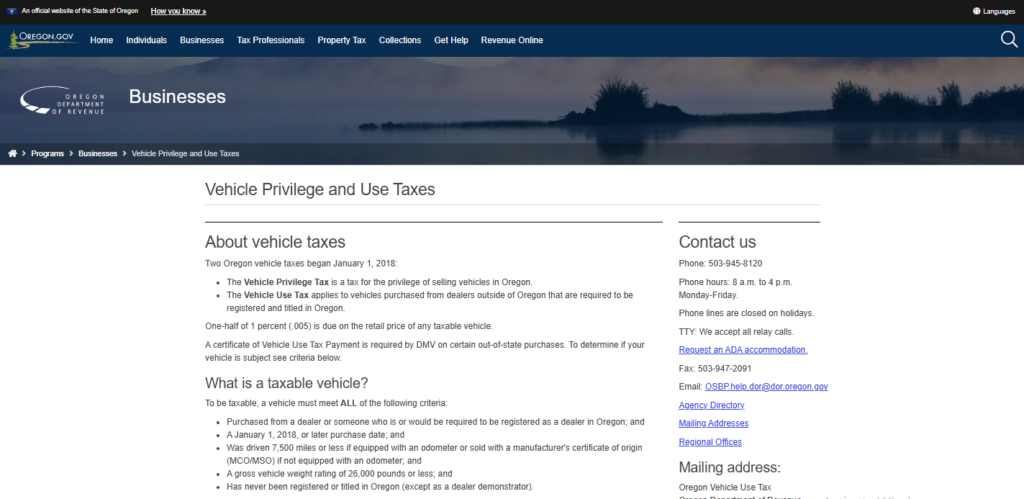
On the other hand, the use tax targets vehicles purchased outside Oregon and brought into the state for use. The rate is also 0.5% of the purchase price, applied to the vehicle’s value at the time of registration. For example, if a resident moves to Oregon https://oregon.public.law/statutes/ors_320.405 with a car bought for $20,000 in another state, the use tax would amount to $100. This ensures parity between in-state and out-of-state vehicle purchases.
How the Taxes Work Together
Both taxes are collected during the registration and titling process. When registering https://oregon.public.law/statutes/ors_320.410 an out-of-state vehicle, the Oregon DMV requires a Certificate of Vehicle Use Tax Payment or proof of tax calculation. These taxes are separate from county registration fees, standard title fees, or VIN inspection charges.
Example Table – Vehicle Taxes for Out-of-State Purchases:
| Vehicle Purchase Price | Privilege Tax (In-State) | Use Tax (Out-of-State) | Notes |
|---|---|---|---|
| $15,000 | $75 | $75 | Must be paid before receiving the registration card |
| $25,000 | $125 | $125 | Applies to cars, trucks, and motorcycles |
| $40,000 | $200 | $200 | Must be paid before receiving registration card |
These taxes are mandatory for all new residents registering vehicles from other states. They help cover road maintenance and other DMV services.
Vehicle Inspection and Emissions Requirements
Out-of-state vehicles must complete a VIN inspection and, in certain areas, an emissions test before Oregon registration. Vehicles less than four model years old are usually exempt from emissions testing, but all vehicles require verification of their identification number. Registering a vehicle https://www.oregon.gov/deq/vehicle-inspection/pages/default.aspx from another state in Oregon begins with a VIN inspection, which confirms the vehicle identification number matches the title and other documentation. This inspection is completed at an Oregon DMV office, and the VIN inspection fee is $9. Inspectors check the physical VIN plate and compare it with the paperwork to prevent fraud or errors during the DMV transfer process. Completing this step ensures that the vehicle can legally be titled and registered in Oregon.
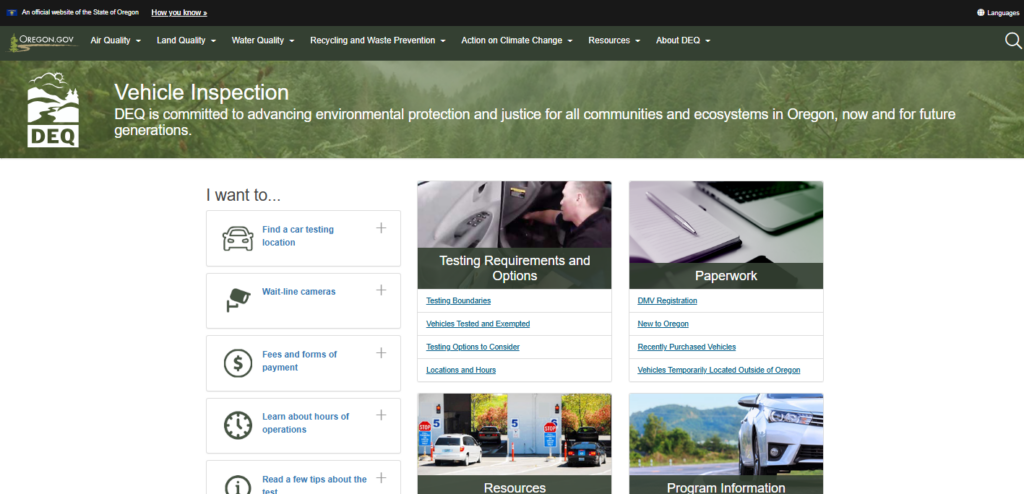
In addition to VIN verification, many vehicles must undergo emissions testing, especially if registered in the Portland metropolitan area or the Medford area. Emissions tests measure pollutants from the vehicle to ensure compliance with state air quality standards. Fees vary by location:
- Portland metropolitan area: $25
- Medford area: $20
Testing occurs at DEQ Clean Air Stations or other authorised testing sites. After a vehicle passes, the DMV issues a Certificate of Compliance, which is required to complete registration. Vehicles that are within the first four model years are exempt from emissions tests, allowing newer cars to skip this step.
The process is straightforward but requires planning. Steps include:
- Schedule a VIN inspection appointment at a local DMV office.
- Determine if the vehicle falls within an emissions-required area.
- Complete emissions testing at a DEQ Clean Air Station if needed.
- Obtain the Certificate of Compliance to finalise registration.
Steps DMV Process for Out-of-State Registration
Registering a vehicle from another state in Oregon involves a few clear steps. Completing the DMV transfer process properly ensures that the car is legally titled and registered without delays. For residents moving to Oregon, the vehicle registration process begins with gathering the required documents, followed by scheduling a DMV appointment, completing a VIN inspection, paying all applicable fees, and finally receiving the plates and registration card. Each step involves specific requirements, so following a structured approach can save time and prevent errors.
Gather Required Documents
Before visiting the Oregon DMV, residents must collect all essential paperwork. These documents prove ownership, residency, and the vehicle’s purchase details.
Necessary documents include:
- Out-of-state vehicle title – shows legal ownership of the car.
- Proof of Oregon residency – utility bill, rental agreement, or Oregon driver’s license.
- Bill of sale or purchase receipt – required if the vehicle was recently bought.
- Odometer disclosure statement – needed for vehicles under 10 years old.
- Proof of insurance – Oregon liability coverage is mandatory.
Having these documents ready helps prevent additional DMV visits and ensures the titling charges and registration are processed efficiently. Non-resident fees may apply if residency status is not clearly established.
Schedule a DMV Appointment
Oregon DMV offices handle both vehicle title transfers and registration appointments. Booking a visit online or by phone is recommended to avoid long wait times.
- Visit the official Oregon DMV website to select a convenient office.
- Choose a service type: vehicle title & registration.
- Confirm appointment and note any special requirements for out-of-state registration in Oregon.
Scheduling in advance ensures a smoother vehicle transfer fees process, especially during peak moving seasons.
Complete VIN Inspection
All vehicles coming from out-of-state require a VIN (Vehicle Identification Number) inspection. This step verifies the car’s identity against the title and confirms it meets Oregon requirements.
- Inspection can be done at the DMV during your appointment.
- The standard VIN inspection fee is $9.00.
- Inspectors check for title inconsistencies, previous accidents, or tampering.
Passing this step is necessary to move forward with the vehicle registration process in Oregon, and it helps prevent delays or rejections.
Pay Registration, Title, and County Fees
Once the documents and VIN inspection are complete, the next step is paying all applicable fees. Fees vary depending on vehicle type, fuel efficiency, and county of residence.
Typical charges include:
| Fee Type | Amount | Notes |
|---|---|---|
| State registration | Varies ($126–$460) | Based on vehicle fuel efficiency and type |
| Title fee | Varies ($240–$331) | Required for all vehicles |
| County registration | $60–$112 | Collected by DMV along with state fees |
| VIN inspection | $9 | Out-of-state vehicles only |
| New license plates | $26 | Optional if transferring plates from another vehicle |
| Plate transfer | $30 | Optional if using existing plates |
Calculating these fees ahead of time helps anticipate total costs, including any non-resident fees and titling charges for out-of-state vehicles.
Receive Plates and Registration Card
After completing payment, the DMV issues the vehicle’s registration card and license plates.
- Attach new plates to the vehicle immediately.
- Keep the registration card in the car at all times.
- If transferring plates from another Oregon vehicle, verify that the DMV updates the records.
Completing this step finalises the out-of-state registration in Oregon, making the vehicle legally registered for road use.
Oregon DMV Field Offices for Out-of-State Registration
For residents moving to Oregon, registering a vehicle at a local DMV office is required within 30 days. The state provides multiple field offices to handle out-of-state vehicle registration efficiently. Oregon DMV field offices offer services including vehicle title transfers, registration appointments, and VIN inspections. Scheduling an appointment ensures faster service and helps residents complete the DMV transfer process smoothly. Each office provides resources for vehicle registration in Oregon, making it easy for new residents to comply with state requirements.
Major Oregon DMV Offices
The following offices handle out-of-state registration https://www.oregon.gov/odot/dmv/pages/offices/index.aspx and are equipped to process all necessary paperwork, including title fees, registration charges, and VIN inspections:
Portland Downtown DMV Office
- Address: 1502 Southwest Sixth Avenue, Portland, OR 97201
- Phone Number: (503) 299-9999
- Services: Out-of-state registration, VIN inspection, title transfers
- Website: https://www.oregon.gov/odot/dmv/pages/offices/portlanddowntown.aspx
Gresham DMV Office
- Address: 1519 Northeast 181st Avenue, Portland, OR 97230
- Phone Number: (503) 299-9999
- Services: Vehicle registration in Oregon, DMV transfer process
- Website: https://www.oregon.gov/odot/dmv/pages/offices/gresham.aspx
Salem North DMV Office
- Address: 955 Lancaster Drive NE, Salem, OR 97301
- Phone Number: (503) 945-5000
- Services: Out-of-state registration, license plates, VIN inspections
- Website: https://www.oregon.gov/odot/dmv/pages/offices/salemn.aspx
Eugene DMV Office
- Address: 499 Valley River Centre, Eugene, OR 97401
- Phone Number: (541) 686-7855
- Services: Registration appointments, title transfers
- Website: https://www.oregon.gov/odot/dmv/pages/offices/eugenedtc.aspx
Beaverton DMV Office
- Address: 10280 Southwest Park Way, Portland, OR 97225
- Phone Number: (503) 299-9999
- Services: DMV transfer process, plate transfers
- Website: https://www.oregon.gov/odot/dmv/pages/offices/beaverton.aspx
Bend DMV Office
- Address: 63085 North Highway 97, Building L, Bend, OR 97703
- Phone Number: (541) 388-6322
- Services: Vehicle registration in Oregon, out-of-state registration
- Website: https://www.oregon.gov/odot/dmv/pages/offices/bend.aspx
Medford DMV Office
- Address: 987 Medford Centre Drive, Medford, OR 97504
- Phone Number: (541) 776-6025
- Services: VIN inspection, registration appointments
- Website: https://www.oregon.gov/odot/dmv/pages/offices/medford.aspx
Springfield DMV Office
- Address: 204 North 30th Street, Springfield, OR 97478
- Phone Number: (503) 945-5000
- Services: DMV transfer process, out-of-state registration
- Website: https://www.oregon.gov/odot/dmv/pages/offices/springfield.aspx
Hillsboro DMV Office
- Address: 1300 SW Oak St, Suite H, Hillsboro, OR 97123
- Phone Number: (503) 299-9999
- Services: Vehicle registration in Oregon, title transfers
- Website: https://www.oregon.gov/odot/dmv/pages/offices/hillsboro.aspx
Corvallis DMV Office
- Address: 870 Northeast Circle Boulevard, Corvallis, OR 97330
- Phone Number: (541) 757-4195
- Services: Out-of-state registration, plate transfers
- Website: https://www.oregon.gov/odot/dmv/pages/offices/corvallis.aspx
(FAQ) About the Registration Out of State
Out-of-state residents can start their vehicle registration process in Oregon at a DMV office, but most steps cannot be completed entirely online. Some forms and fees may be submitted digitally, yet a physical DMV appointment is usually required to finalise registration.
Can I register online if I moved from another state?
Quick Answer: Some forms for out-of-state registration in Oregon can be submitted online, but most vehicles require an in-person visit to complete the registration. Digital submissions may include renewals or address updates, but first-time registration for new residents usually happens at a DMV office.
Do I need a VIN inspection for all vehicles?
VIN inspections are required for all out-of-state vehicles registering in Oregon, but not for vehicles already titled in Oregon. This inspection confirms the vehicle identification number matches the title documentation.
How is the use tax calculated for my car?
Vehicles purchased outside Oregon are subject to a 0.5% vehicle use tax, calculated based on the retail sales price. This tax applies regardless of whether the car was bought from a private party or a dealer in another state.
What if I move temporarily and don’t become a resident?
Temporary residents or individuals staying less than 30 days are generally not required to register their vehicles in Oregon. Registration is mandatory only for those establishing legal residency.
Can I transfer my existing license plates from another state?
Oregon generally does not allow out-of-state license plates to be transferred directly. Most new residents must obtain Oregon plates during registration, though some exceptions exist for specialised plates.