Oregon vehicle registration fees are based on a structured formula that takes into account fuel efficiency, vehicle category, and registration location. The total Oregon registration cost combines state vehicle registration fees, standard service charges, and county fees in select areas. This system applies to passenger cars, electric vehicles, motorcycles, and trailers. Each vehicle type appears on a separate line of the DMV fee schedule. As a result, registration totals change based on both the vehicle and the address on record. This approach supports road funding across the state.
The state applies an MPG-based registration model that links higher fuel efficiency to higher base fees, and passenger vehicles receive two-year or four-year terms, which affects the annual registration cost shown on renewal notices. An Oregon License Plate is issued as part of this registration process and serves as the official identifier tied to the vehicle’s fee structure, renewal period, and eligibility requirements. County charges apply only in certain regions and raise the final amount paid, while electric and high-MPG vehicles may qualify for the OReGO road usage program, which replaces higher base fees with mileage reporting. This fee breakdown helps drivers compare standard registration costs with OReGO pricing before completing the registration process.
How Vehicle Registration Fees Work in Oregon
Oregon vehicle registration fees rely on fuel efficiency, vehicle type, and location. The total Oregon registration cost combines state charges with possible county fees and service charges. Oregon uses an MPG-based registration system that ties costs to a vehicle’s environmental impact. Passenger vehicles with lower fuel efficiency pay lower base fees, and higher-MPG or electric vehicles face higher state charges. The Oregon DMV fee schedule applies different rates to passenger cars, motorcycles, trailers, and specialty vehicles. Most registrations cover two years, with new vehicles often receiving a four-year registration.
How Oregon Calculates Vehicle Registration Fees
The fee breakdown starts with state registration fees, set by vehicle type and fuel efficiency rating pulled from the VIN. Electric vehicles and high-MPG cars carry higher base fees, reflecting road usage and infrastructure funding goals. Service charges such as plate issuance or VIN inspections may raise the total. Local fees can change the final Oregon registration cost. Three counties—Multnomah, Washington, and Clackamas—charge extra county registration fees. All other counties apply only state fees, which keeps costs lower for many residents. Oregon offers relief for fuel-efficient drivers through the OReGO program. This option replaces higher MPG-based registration fees with a per-mile road usage charge. Vehicles rated at 40+ MPG and electric vehicles qualify.
Base Registration Fees by Vehicle Type
The cost to register a car in Oregon depends on vehicle type, fuel efficiency, and registration length. Passenger cars, motorcycles, and specialty vehicles each follow different vehicle registration fees set by the Oregon DMV.
Passenger Vehicles
Passenger vehicle registration in Oregon follows an MPG-based structure that links fees with fuel efficiency. This system affects both the annual registration cost and long-term ownership expenses, especially for new vehicle registration. Most passenger https://www.oregon.gov/odot/dmv/pages/fees/vehicle.aspx cars receive a two-year registration, and brand-new vehicles qualify for a four-year registration period. Fees increase as fuel efficiency rises, and electric vehicles carry higher rates unless enrolled in OReGO.
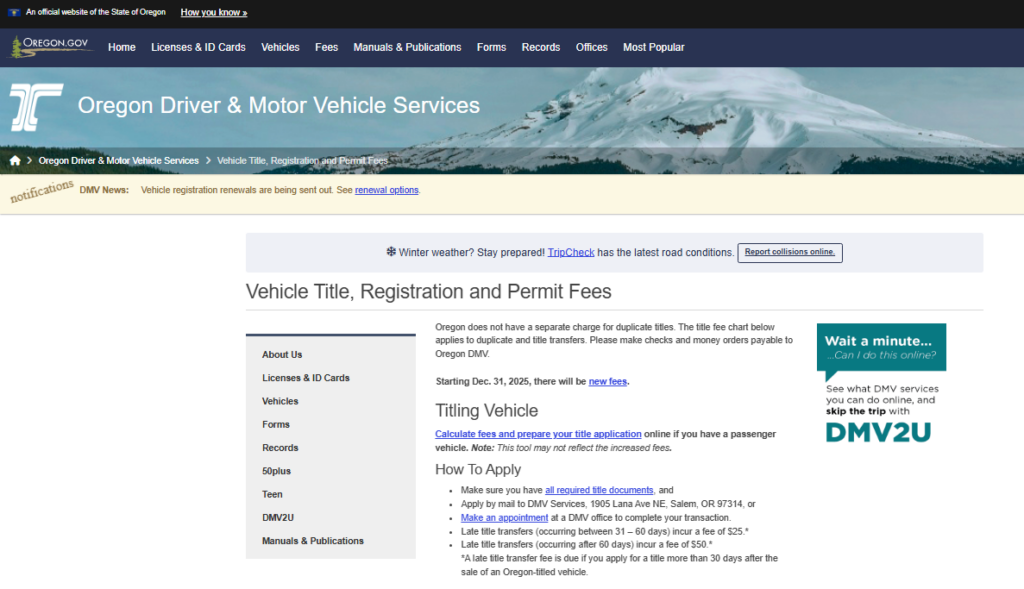
Two-Year Passenger Vehicle Registration Fees (Effective 2026):
| Fuel Efficiency | Registration Fee |
|---|---|
| 0–19 MPG | $210 |
| 20–39 MPG | $220 |
| 40+ MPG (non-OReGO) | $300 |
| Electric vehicles (non-OReGO) | $460 |
Four-Year New Vehicle Registration Fees:
| Fuel Efficiency | Registration Fee |
|---|---|
| 0–19 MPG | $252 |
| 20–39 MPG | $272 |
| 40+ MPG (non-OReGO) | $312 |
| Electric vehicles (non-OReGO) | $632 |
Fuel efficiency plays a direct role in the Cost To Register a Car in Oregon, since higher-MPG and electric vehicles face added charges. This structure reflects state policy tied to road usage and environmental impact. Drivers with fuel-efficient or electric cars often compare these fees with the OReGO road usage charge program, which replaces higher registration fees with per-mile charges.
Motorcycles, Mopeds, and Other Vehicles
Oregon applies fixed vehicle type fees for motorcycles and specialty vehicles rather than MPG-based pricing. Registration periods vary, ranging from two-year terms to permanent registration.
Standard Registration Fees by Vehicle Type:
| Vehicle Type | Registration Fee | Period |
|---|---|---|
| Motorcycles & Mopeds | $172 | 2 years |
| Light Trailers (≤ 8,000 lbs) | $126 | 2 years |
| Heavy Trailers (> 8,000 lbs) | $10 | Permanent |
| Antique (Historic) Vehicles | $100 | Permanent |
| Special Interest Vehicles | $100 | Permanent |
| Snowmobiles | $10 | 2 years |
Motor homes, commercial trucks, and buses follow separate weight-based schedules published by the Oregon DMV. These fees vary by gross vehicle weight rating and usage classification.
2026 Fee Increase: What Changes?
Oregon registration costs rise sharply in 2026, with most vehicle types seeing increases between 45% and 95%. The registration fee increase in 2026 affects gas vehicles, electric vehicles, and motorcycles, with higher service charges tied to MPG-based registration rules. The new fee schedule takes effect on January 1, 2026, and it reshapes the Oregon registration cost for many drivers. The state raises base registration fees across nearly every category, which means owners pay more before county fees, plates, or title charges apply.
2025 vs 2026 Registration Fees by Vehicle Type
The table below shows how much costs increase over the standard two-year registration period:
| Vehicle Type | 2025 Fee | 2026 Fee | Increase | Percentage Change |
|---|---|---|---|---|
| 0–19 MPG vehicles | $126 | $210 | +$84 | ~67% |
| 20–39 MPG vehicles | $136 | $220 | +$84 | ~62% |
| 40+ MPG vehicles | $156 | $300 | +$144 | ~92% |
| Electric vehicles (non-OReGO) | $316 | $460 | +$144 | ~46% |
| Motorcycles & mopeds | $88 | $172 | +$84 | ~96% |
These increases apply before local county fees and other service charges. At the same time, plate fees and most administrative costs stay the same.
Impact on Electric and Fuel-Efficient Vehicles
Electric vehicles and high-MPG cars will experience a major shift in 2026. New EV fees jump by $144 for drivers who stay outside the OReGO program. Fuel-efficient vehicles rated 40+ MPG see the largest percentage increase under the MPG-based registration system. The OReGO road usage program becomes more attractive after 2026. Eligible vehicles enrolled in OReGO continue to pay a flat $86 for two years, which avoids most of the new EV fees tied to fuel efficiency.
OReGO Road Usage Charge Program
The OReGO program gives eligible drivers a lower-cost option than standard vehicle registration fees. It replaces higher flat fees with a mileage-based registration model for fuel-efficient vehicles and electric vehicles. The OReGO program works as https://www.oregon.gov/odot/orego/Pages/default.aspx an alternative for drivers who want predictable costs and fewer upfront charges. Instead of paying Oregon’s higher registration fees for high-MPG cars and EVs, participants pay a per-mile road usage charge and a reduced registration fee. This structure appeals to drivers who travel fewer miles each year and want a clearer link between road use and cost.
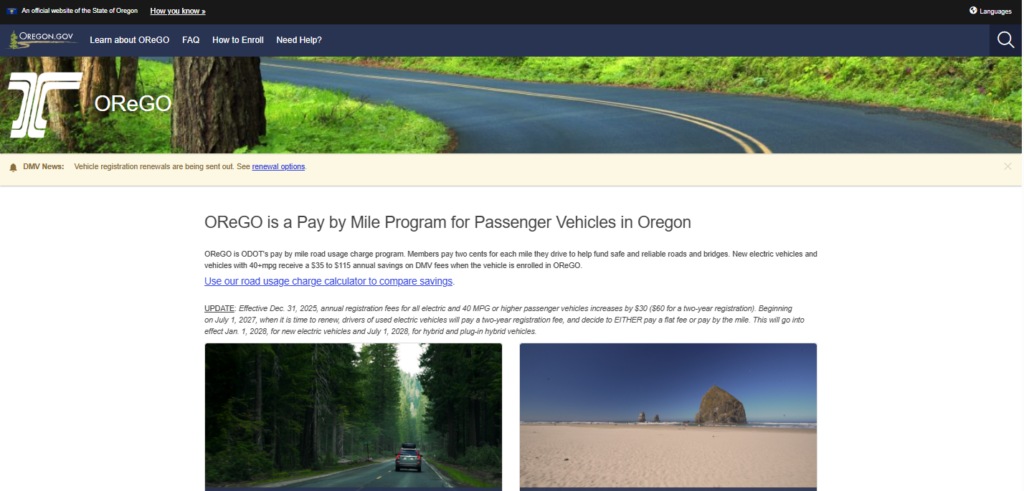
How the OReGO Program Works
OReGO shifts part of the registration cost from a flat fee to mileage tracking. Miles are reported through approved devices or apps, which record distance driven inside Oregon. Out-of-state miles do not count toward charges, which helps limit unexpected costs for frequent travelers.
Key program details include:
- Eligibility: Vehicles rated 40+ MPG and all electric vehicles
- Registration fee: $86 for two years
- Cost structure: Mileage-based registration instead of higher flat fees
- Enrollment rule: Drivers stay enrolled for the full registration period
Who Benefits Most From OReGO
Drivers with fuel-efficient vehicles often see savings compared to standard vehicle registration fees. EV owners, in particular, avoid the state’s higher electric vehicle registration charges by choosing this option. Low-mileage drivers tend to benefit the most.
| Feature | OReGO Program |
|---|---|
| Vehicle types | 40+ MPG, EV registration |
| Registration term | 2 years |
| Flat registration fee | $86 |
| Cost basis | Miles driven in Oregon |
OReGO supports fuel-efficient vehicle use while keeping registration costs more predictable for eligible drivers.
Local and County Fees in Oregon
Local registration fees in Oregon depend on the county where the vehicle is registered. Only three counties charge extra local fees, while the remaining 33 counties apply no county vehicle registration cost at all. Oregon’s DMV fee schedule includes https://www.oregon.gov/odot/dmv/docs/chapter_m.pdf state-level charges for every vehicle, yet some counties add separate service charges to fund local transportation projects. These regional cost variations can raise the total registration bill by a noticeable amount, especially in the Portland metro area.
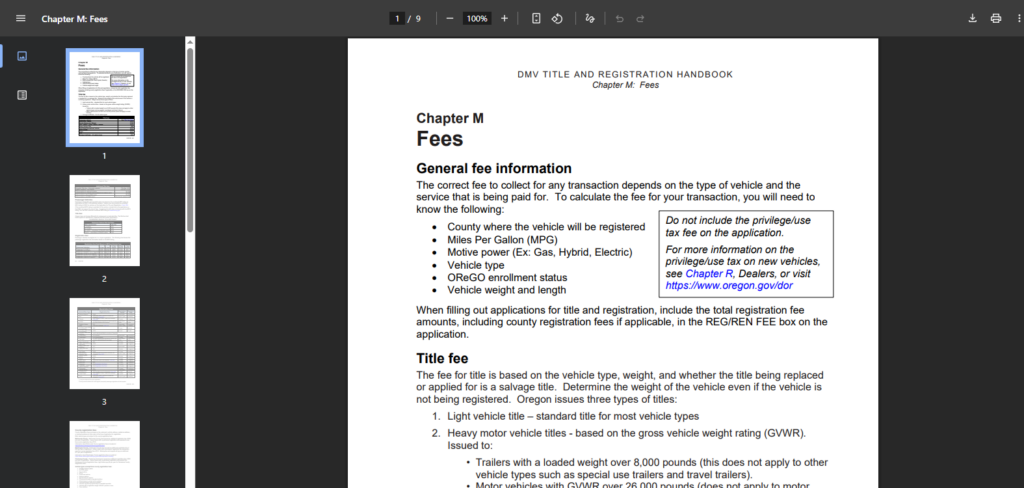
Counties With Additional Local Registration Fees
Three counties apply local registration fees on top of state fees. These charges vary by vehicle type and registration length.
Multnomah County
- Passenger vehicles: $112 (two years) | $224 (four years)
- Motorcycles and mopeds: $78 (two years) | $156 (four years)
- Light trailers: $112 (two years) | $224 (four years)
Washington County
- Passenger vehicles: $60 (two years) | $120 (four years)
- Motorcycles and mopeds: $34 (two years) | $68 (four years)
- Light trailers: $60 (two years) | $120 (four years)
Clackamas County
- Passenger vehicles: $60 (two years) | $120 (four years)
- Motorcycles and mopeds: $30 (two years) | $60 (four years)
- Light trailers: $10 (two years) | $20 (four years)
These county vehicle registration costs apply automatically based on the owner’s address, which means moving within Oregon can change the total fee.
Counties Without Local Registration Fees
The other 33 Oregon counties charge no local registration fees. Vehicle owners in these areas pay only state registration costs, license plate fees, and title-related service charges. This creates clear regional cost variation, with rural counties offering lower overall registration expenses compared to urban regions.
License Plate and Title Fees
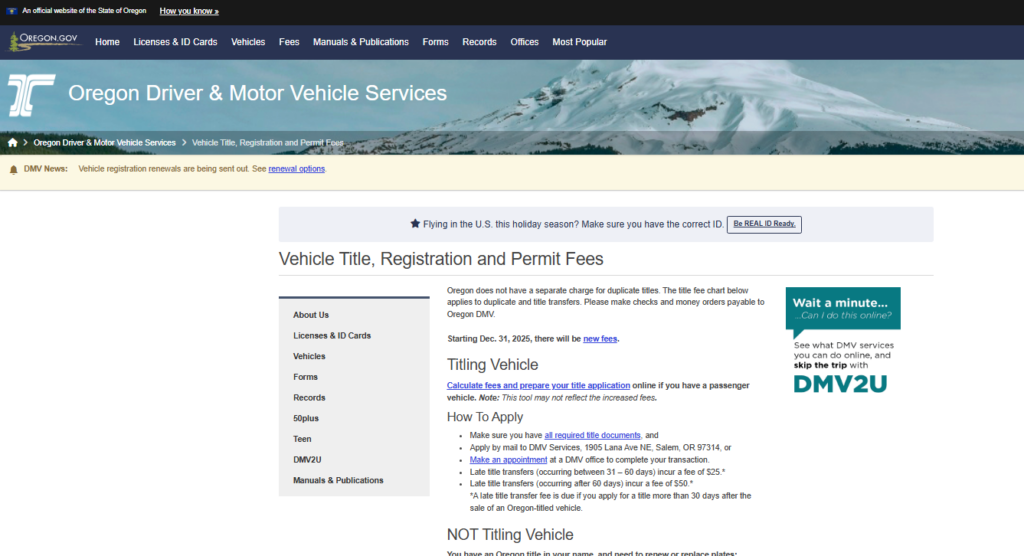
When registering a car in Oregon, vehicle owners must pay separate https://www.oregon.gov/odot/dmv/pages/fees/vehicle.aspx# fees for license plates and titles. These charges vary depending on the type of vehicle, the plate chosen, and any additional administrative services required.
License Plates
Oregon requires all vehicles to have valid license plates, and fees depend on whether the plates are new, replacements, or specialty options. For standard plates, the cost is $26 for two plates or $13 for a single plate. Transferring plates between vehicles carries a $30 fee, while replacement plates cost $12.
Specialty plates add an extra fee based on the design chosen. Popular options include:
| Plate Type | Two-Year Fee / Surcharge |
|---|---|
| Salmon | $30 per set |
| Crater Lake | $30 initial only |
| Cultural | $50 per set |
| Wine Country | $30 per set |
| Portland Trail Blazers | $40 per set |
| Special Registration Program | $40 per set |
| Group Plates (Institutions) | $64 per set |
| Group Plates (Non-Profit/Veterans) | $20 per set |
These additional charges are considered service fees and are added to the base registration cost. Specialty plates can reflect personal interests, support causes, or represent organizations while slightly increasing overall registration costs.
Title Fees
Title fees cover the legal documentation of vehicle ownership and vary based on vehicle type and special circumstances. For light vehicles, fees are calculated in alignment with registration rates, although exact amounts may differ depending on MPG ratings and vehicle classification.
For heavier or specialized vehicles, standard title fees include:
| Vehicle Type | Title Fee |
|---|---|
| Heavy vehicles (>26,000 lbs GVWR) | $90 |
| Heavy trailers (>8,000 lbs) | $90 |
| Park Model Recreational Vehicle | $101 |
| Salvage Certificate | $27 |
| Title correction (non-DMV error) | Regular title fee |
These administrative fees ensure accurate ownership records and support the registration process. Title charges may also apply to changes such as transferring ownership, correcting errors, or issuing a salvage certificate.
How to Calculate Total Registration Cost
The total cost to register a car in Oregon depends on several factors, including the vehicle type, county fees, license plates, and title charges. By combining these costs step by step, vehicle owners can accurately estimate their Oregon registration cost. Calculating the total registration cost is straightforward if each component is considered individually. Oregon vehicle registration includes a base registration fee, a county-specific fee, license plate charges, title fees, and any optional or additional service charges. Drivers should also be aware of Car Insurance Requirements, as maintaining valid insurance is a mandatory part of the registration process. Including insurance in the planning ensures that all legal and financial obligations are met, providing a complete picture of the total cost. Using this approach ensures drivers account for every expense required by the DMV.
Base Registration Fee
The base fee depends on the vehicle type and fuel efficiency. For passenger cars, this fee is determined by miles-per-gallon (MPG) ratings or vehicle classification for motorcycles, trailers, and electric vehicles (EVs).
Example Base Fees (2026 Two-Year Registration):
| Vehicle Type | Fee |
|---|---|
| Passenger car (20–39 MPG) | $220 |
| Electric vehicle | $460 |
| Motorcycle | $172 |
| Light trailer (≤8,000 lbs) | $126 |
This forms the foundation of the total registration cost. Higher or lower MPG ratings adjust the fee, while EVs have a significantly higher base unless enrolled in the OReGO program.
County Fees
Oregon has county-specific fees that can substantially affect the total registration cost. Multnomah, Washington, and Clackamas counties charge additional amounts, while most other counties do not.
Example County Fees (Two-Year Period):
| County | Passenger Car | Motorcycle | Light Trailer |
|---|---|---|---|
| Multnomah | $112 | $78 | $112 |
| Washington | $60 | $34 | $60 |
| Clackamas | $60 | $30 | $10 |
| Other Counties | $0 | $0 | $0 |
Adding the county fee to the base registration fee provides a more accurate Oregon registration cost.
License Plate Fees
License plate fees include new plates, replacement plates, or transferring existing plates. Specialty plates have additional surcharges.
License Plate Fees:
| Service | Fee |
|---|---|
| New plates (two) | $26 |
| Replacement plates | $12 |
| Plate transfer | $30 |
| Specialty plates surcharge | $30–$50 |
These charges are applied per registration period and should be included in the total cost calculation.
Title Fees
Title fees vary based on vehicle type. Light vehicles, heavy vehicles, and trailers each have separate charges.
Title Fee Examples:
| Vehicle Type | Title Fee |
|---|---|
| Light vehicle | $93–$101 |
| Heavy vehicle (>26,000 lbs) | $90 |
| Heavy trailer (>8,000 lbs) | $90 |
| Park model RV | $101 |
These fees are mandatory and add to the overall Cost To Register a Car in Oregon.
Optional or Additional Charges
Additional service charges may include VIN inspections ($9), duplicate registration cards ($5), or Transfer on Death (TOD) filings ($13). Optional specialty plates also fall under this category.
Putting It All Together: Example Calculations
Passenger Car in Multnomah County (20–39 MPG):
- Base fee: $220
- County fee: $112
- Plates: $26
- Title: $93
- Total: $451
Electric Vehicle Not in OReGO, Washington County:
- Base fee: $460
- County fee: $60
- Plates: $26
- Title: $101
- Total: $647
Motorcycle in Clackamas County:
- Base fee: $172
- County fee: $30
- Plates: $26
- Title: $90
- Total: $318
Light Trailer in a county with no additional fee:
- Base fee: $126
- County fee: $0
- Plates: $26
- Title: $90
- Total: $242
Using this formula—base fee + county fee + plates + title + optional charges—vehicle owners can quickly determine the full Oregon registration cost for any vehicle type. Leveraging the DMV2U online tools can also help verify calculations and check for accurate service charges in real-time.
Special Considerations for EVs and Hybrids
Electric and hybrid vehicles in Oregon have registration fees that differ from those of traditional gas-powered cars. Drivers can often save money through the OReGO program or by planning for upcoming fee changes. Oregon has announced new fee structures for electric vehicles (EVs) and hybrids starting in 2027 and 2028. These changes aim to balance environmental goals with fair revenue collection. Used electric vehicles will have a two-year registration fee of $170, with drivers able to choose between a flat fee or the OReGO mileage-based system. New electric vehicles will follow a revised fee structure beginning in 2028, while hybrid and plug-in hybrid vehicles will see updated rates later that same year.
The OReGO program provides an alternative for drivers of fuel-efficient and electric vehicles. Instead of paying higher flat registration fees, participants pay per mile driven. This can significantly reduce annual registration costs, especially for drivers who use their EVs or hybrids primarily for short commutes. Enrollment requires staying in the program for the full registration period or paying the difference at the end.
Key benefits of the OReGO program include:
- Lower overall fees for high-mileage or efficient vehicles
- Flexible payment based on actual road usage
- Applicable to vehicles rated 40+ MPG and most electric vehicles
MPG-based calculations, vehicle type, and county location influence EV and hybrid registration fees. Drivers should consider these factors when estimating costs. For example, a non-OReGO EV could face fees of $460 for a two-year registration, while the same vehicle under OReGO might pay $86 for two years.
(FAQ) About Cost To Register
Oregon vehicle registration fees vary based on vehicle type, fuel efficiency, and county of residence. Most drivers can reduce costs by enrolling in programs like OReGO or by choosing fuel-efficient vehicles, while total registration costs include base fees, county charges, title fees, license plate fees, and optional specialty plate surcharges.
Can I register my EV at a lower cost?
Yes, electric vehicle owners in Oregon can often pay less by joining the OReGO Road Usage Charge Program, which replaces high standard registration fees with a mileage-based charge. EV registration outside OReGO can cost up to $460 for two years in 2026, but OReGO participants pay $86 for the same period regardless of vehicle type. Hybrid vehicles rated 40+ MPG are also eligible. Drivers must remain enrolled for the full registration period to avoid paying the difference, and service charges such as title fees and license plate fees still apply. Using OReGO not only lowers costs but also aligns with Oregon’s MPG-based registration system, making it an attractive option for efficient vehicle owners.
How are registration fees determined in Oregon?
Oregon calculates registration fees primarily based on the vehicle’s fuel efficiency, type, and weight, along with any county-specific fees. Passenger cars, motorcycles, trailers, and commercial vehicles all have separate schedules, while new vehicles with a Manufacturer’s Certificate of Origin receive a four-year initial registration. Additional service charges, such as administrative fees, VIN inspections, and title processing, contribute to the total cost. The Oregon DMV also provides online tools through DMV2U that allow drivers to verify fees and complete certain steps digitally. This structured approach ensures that registration costs reflect both environmental considerations and the specific characteristics of each vehicle.
Are there differences between counties?
Yes, the county where a vehicle is registered can significantly impact total registration costs. Multnomah, Washington, and Clackamas counties impose additional fees on top of the state’s base registration, while the other 33 counties do not charge extra local fees. For example, a two-year registration for a passenger vehicle in Multnomah County includes a $112 county fee, whereas the same vehicle in most other counties pays nothing beyond the state fee. Administrative charges like title fees and license plate costs remain consistent statewide. These regional differences can affect both EV and conventional vehicle registration, making it important for owners to account for location when estimating total costs.
How to calculate the total registration cost?
Calculating the full registration cost requires combining the base registration fee, applicable county charges, license plate fees, title fees, and any additional service charges such as VIN inspections, duplicate registrations, or Transfer on Death filings. For example, a 20–39 MPG passenger car registered in Multnomah County for two years in 2026 would have a base registration of $220, a county fee of $112, a license plate fee of $26, and a title fee of $101, bringing the total to $459. Online tools like DMV2U can help residents calculate the total cost accurately, ensuring all service charges and optional fees are included. This approach allows vehicle owners to plan and explore cost-saving strategies, including OReGO enrollment or avoiding specialty plates unless necessary.
Can I register a new vehicle for four years instead of two?
Yes, new vehicles in Oregon that come with a Manufacturer’s Certificate of Origin are eligible for a four-year initial registration period, which spreads the cost over a longer term and can make budgeting easier for vehicle owners. The exact fee depends on the vehicle’s fuel efficiency, type, and whether it qualifies for OReGO if it’s an electric or highly fuel-efficient car. For example, a 40+ MPG passenger car not enrolled in OReGO would pay $312 for a four-year registration in 2026, while the same vehicle in OReGO would only pay $172. Other vehicles, such as motorcycles, trailers, and RVs, also have specific four-year or permanent registration options. Service charges like title fees, license plate fees, and administrative costs still apply, and using DMV2U tools helps drivers confirm exact totals before completing the registration. This option provides flexibility and can reduce the hassle of frequent renewals while accounting for both state and local fees.