
Registering a car in Oregon is the official process of linking a vehicle to its owner with the state and ensuring it meets all legal requirements. Every vehicle driven on public roads must have a valid Oregon vehicle registration, following the state’s DMV registration rules to confirm ownership, safety, and compliance. This process applies to cars, trucks, motorcycles, and specialized vehicles, including electric and commercial models. Oregon law requires registration to track vehicles for liability, law enforcement, and road safety purposes. Vehicle owners must complete registration within 30 days of establishing residency or purchasing a vehicle in Oregon.
The registration process involves submitting proof of ownership, completing a title transfer if needed, paying applicable fees, and meeting inspection or emissions standards where required. Adhering to OR License Plate Requirements ensures that vehicles receive the correct plates and remain compliant with state regulations. Completing registration through the Oregon DMV guarantees vehicles are legally documented, license plates are issued, and owners maintain compliance with state laws. Registration provides official proof of ownership and allows drivers to renew or transfer vehicles as necessary. The DMV also manages special registrations, including antique, low-speed, and fleet vehicles. Following the correct process prevents fines, legal complications, and potential impoundment for unregistered vehicles.
What Does Registering a Car in Oregon Mean?
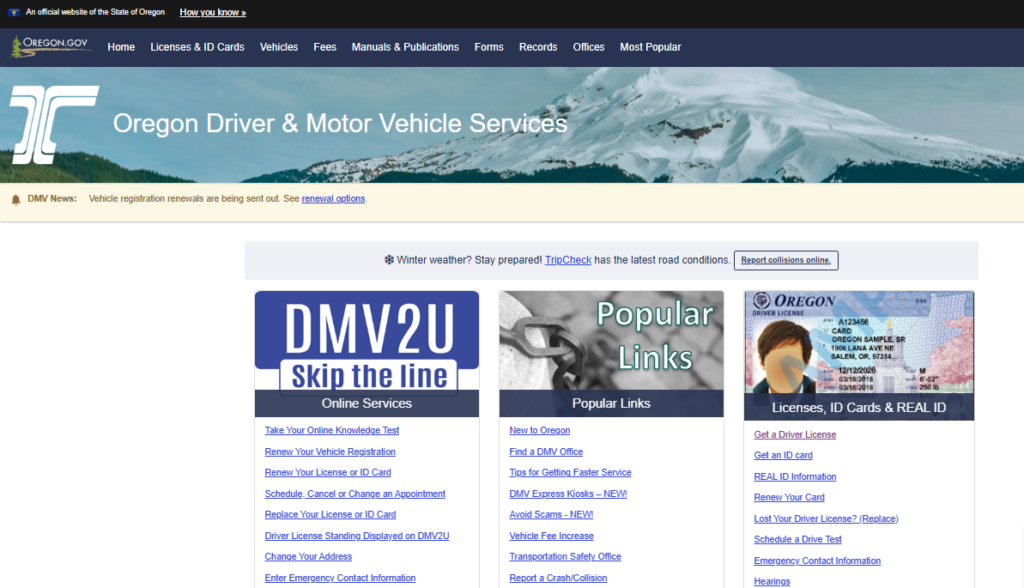
Registering a car in Oregon means officially recording the vehicle with the state so it can legally be driven on public roads. This process ensures that each vehicle has a recognized owner, proper identification, and meets Oregon’s safety and legal standards. In Oregon, vehicle registration https://www.oregon.gov/odot/dmv/pages/index.aspx and vehicle title serve distinct purposes. The title is proof of ownership, showing who legally owns the vehicle. The registration, on the other hand, allows the vehicle to operate on public streets and highways. Both are required for all vehicles used on Oregon roads, and the state enforces these rules through the Oregon DMV to maintain public safety, track vehicle history, and manage legal compliance.
Difference Between Title and Registration
Many drivers confuse the title with registration, but they are separate documents serving different functions.
- Title: Acts as the official proof of ownership. When a car is bought from a dealer or private seller, the title shows who holds legal rights to the vehicle.
- Registration: Provides permission to drive the vehicle legally in Oregon. It includes license plates, renewal dates, and verifies compliance with state insurance requirements.
The distinction is important for transactions such as title transfers, where ownership changes hands, and for registration renewals, which ensure that vehicles remain legally operable.
Why Oregon Requires Both Title and Registration
Oregon mandates both title and registration for vehicles to maintain accurate ownership records and enforce compliance with Oregon vehicle registration rules. These requirements support law enforcement, prevent theft, and provide a framework for taxation and insurance accountability.
- Vehicles must meet Oregon DMV registration rules, including emissions testing in certain regions and proof of liability insurance.
- The registration process ensures each vehicle has a unique identification number linked to the owner, which helps with accountability in traffic incidents or violations.
- The DMV uses these records to manage VIN inspections, plate issuance, and record updates efficiently.
This dual system protects both vehicle owners and the public by keeping vehicle records accurate and legally enforceable.
Legal Basis and DMV Authority
The authority to enforce vehicle registration and title requirements comes from Oregon Revised Statutes Chapter 803, which governs all motor vehicle transactions in the state. The Oregon DMV, a division of the Department of Transportation, manages the registration process, issues titles, and oversees compliance with state regulations.
Key points about legal requirements:
- New residents must register their vehicles within 30 days of establishing residency.
- Military personnel stationed in Oregon but legally residing elsewhere may qualify for exemptions if they maintain registration from their home state.
- Students and temporary visitors may operate out-of-state vehicles without registering in Oregon, provided their home state registration is current.
By following these rules, vehicle owners remain compliant with both state laws and DMV registration regulations, avoiding fines or legal penalties.
How to Register a Car in Oregon
Registering a car in Oregon involves several key steps, from obtaining a title to receiving your registration card and plates. Following the proper process ensures compliance with Oregon DMV rules and avoids delays or penalties.
Get an Oregon Title
Vehicles from another state must first get an Oregon title, which proves ownership and allows registration. Owners need their current out-of-state title or manufacturer’s certificate of origin for new vehicles, along with any lien release documents. Processing usually takes about 7–10 business days when submitted in person.
Complete Title & Registration Application
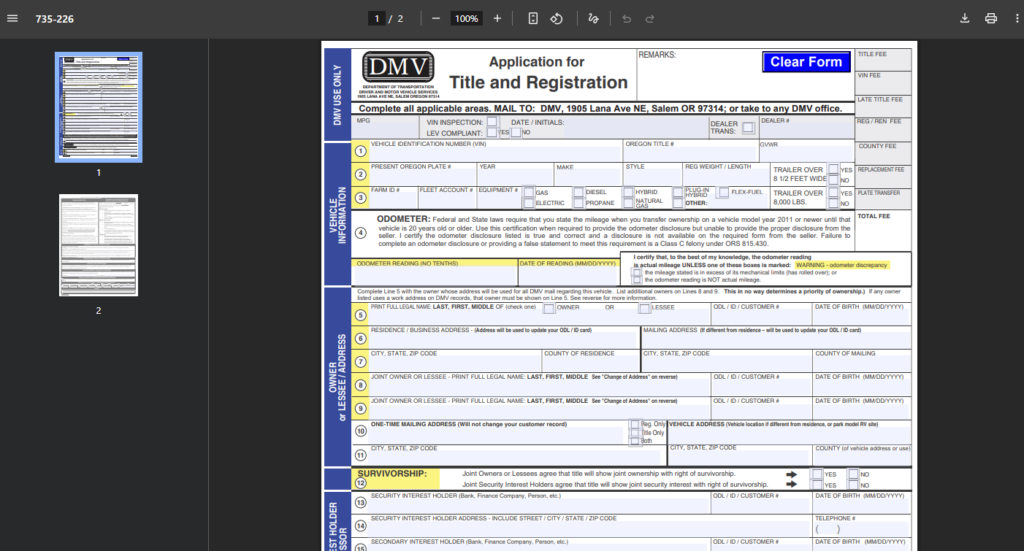
Form 735‑226 is the official Title and Registration Application. Owners must include vehicle details such as VIN, make, model, and year, along with their legal name, Oregon address, purchase date, and signatures. Accurate completion prevents delays and ensures the DMV has correct records for the registration process in Oregon.
VIN Inspection
Out-of-state vehicles or certain private sales require a VIN inspection to confirm the vehicle identification number matches legal documents. This inspection is conducted at any Oregon DMV office or certified inspector for a $9 fee and must be submitted with the registration application to meet state requirements.
Emissions Certification
Vehicles in Portland and Medford-Ashland areas must pass emissions testing, while diesel, electric, and other vehicles outside these regions are exempt. Gasoline vehicles from 1975 onward require the $20 DEQ test, and proof of passing must accompany the registration form. Certification ensures compliance with environmental standards.
Submit to DMV
After completing all forms, inspections, and certifications, owners submit documents to a DMV office in person or by mail to the Oregon DMV Headquarters in Salem. In-person submissions are usually processed within 10 business days, while mailed applications take 2–4 weeks. Appointments are recommended, but walk-ins are accepted depending on availability.
Pay Fees
Registration costs vary based on vehicle type, fuel efficiency, and weight. Fees include title ($101–$192), registration ($126–$316 for two years), license plates ($13–$26), VIN inspection ($9), emissions test ($20 if required), and county fees ($60–$112). Payments can be made with cash, check, or card at DMV offices; online payments are available only for renewals via DMV2U.
Receive Plates & Registration Card
Once documents and fees are processed, the DMV issues Oregon plates, a registration card, and temporary permits if needed for up to 90 days. The registration card should remain in the vehicle at all times, and license plates must be displayed according to Oregon law, completing the registration process.
Who Must Register a Vehicle in Oregon?
Anyone who operates a vehicle on Oregon’s public roads must register it with the state. Registration ensures the vehicle is legally recognized, properly titled, and meets all DMV requirements for safety and accountability. Oregon requires vehicle registration for residents who establish a domicile in the state. Residency is established when a person works, enrolls children in school, registers to vote, or takes other steps indicating an intent to remain in Oregon. New residents have 30 days from establishing residency to complete registration for any vehicles they bring from another state. This requirement also applies to vehicles purchased within Oregon.
Non‑Residents and Exemptions
Certain individuals may not need to register a vehicle in Oregon. Temporary visitors can operate vehicles registered in another state as long as the registration remains valid and current. Military personnel stationed in Oregon but maintaining legal residence elsewhere are generally exempt unless they declare Oregon as their official state of residence. Students attending Oregon colleges while keeping their legal residence in another state are usually exempt, unless they establish residency for tuition or legal purposes. The cost of car registration from out of state is important for those who need to register, as fees can vary depending on the vehicle type, age, and other registration requirements.
Commercial and Fleet Vehicles
Businesses operating vehicles in Oregon must register all vehicles used for commercial purposes. This includes trucks, delivery vans, and other fleet vehicles. Vehicles engaged in interstate commerce may qualify for apportioned registration under the International Registration Plan (IRP), allowing operation in multiple states with a single registration record. Licensed motor vehicle dealers can use dealer plates while conducting business, but personal use still requires standard registration.
Exceptions and Special Vehicles
Not all vehicles require standard registration. Exemptions include:
- Off‑highway vehicles: ATVs, UTVs, and off-road motorcycles operating exclusively off-road must obtain an Oregon Parks and Recreation permit instead of standard registration.
- Stored or inactive vehicles: Vehicles not in use do not require current registration, though registration must resume before operating on public roads.
- Private property vehicles: Construction machinery, industrial equipment, and other vehicles that never leave private land do not require DMV registration.
- Government and military vehicles: Federal, state, and local government vehicles, as well as certain tactical military vehicles, are exempt.
Required Documents to Register a Car in Oregon
Registering a car in Oregon requires submitting specific documents to the https://www.oregon.gov/odot/forms/dmv/226fill.pdf DMV to prove ownership, identity, and compliance with state regulations. Without these documents, the registration process cannot move forward. Collecting the right paperwork in advance ensures a smooth and timely registration process, whether completing the process in person or through DMV2U services.
Title or Ownership Proof
To register a vehicle, the owner must present proof of ownership, either a manufacturer’s certificate of origin for new cars or a properly assigned title for used vehicles. This document confirms legal ownership and is required for any title transfer when a vehicle changes hands. Vehicles with liens must include a lienholder statement showing the loan is satisfied, and private sales require both buyer and seller to complete the title assignment section.
Completed Application Form: 735‑226
Form 735‑226, officially called the Application for Title and Registration, must be completed accurately. It collects essential information such as:
- Vehicle identification number (VIN)
- Vehicle make, model, and year
- Owner’s personal details and address
- Current odometer reading
Submitting a properly filled application ensures the DMV can process the registration without requesting additional information. Errors or omissions may result in delays or extra visits.
Proof of Identity & Oregon Residency
Oregon requires proof of identity and residency to register a car. Acceptable identification documents include:
- Valid Oregon driver’s license
- State-issued ID card
- Passport (in certain circumstances)
Residency can be demonstrated with:
- Utility bills
- Lease or rental agreements
- Oregon voter registration
- Employer-issued documents with an Oregon address
This verifies that the vehicle owner qualifies for Oregon registration and aligns with DMV registration rules.
Proof of Insurance: Minimum Liability Coverage
All vehicles must carry insurance meeting Oregon’s minimum requirements:
- $25,000 bodily injury per person
- $50,000 bodily injury per accident
- $20,000 property damage coverage
The DMV will request an insurance card or policy declaration confirming coverage. Vehicles without valid insurance cannot be registered.
Odometer Disclosure Requirement
Vehicles under 10 years old require an odometer disclosure. This confirms the accurate mileage at the time of ownership transfer.
- Usually included on the title application form.
- Prevents fraud and ensures correct tax and fee calculation.
Lien Release Document
If a previous lien existed, a lien release must be submitted. This document shows that any loan or financial claim on the vehicle has been fully paid. The DMV cannot process registration without it.
VIN Inspection
Vehicles previously registered outside Oregon require a Vehicle Identification Number (VIN) inspection.
- Confirms VIN matches the title documents.
- Ensures the car has not been reported stolen.
- Inspection costs $9 and can be done at DMV offices or authorized inspection stations.
This step is mandatory for title transfers from other states.
Emissions Compliance Where Required
Certain regions in Oregon, including Portland and Medford, require emissions testing before registration.
- Gasoline vehicles from model year 1975 or newer must pass the DEQ emissions test.
- Diesel vehicles and electric vehicles may be exempt.
- Fees are typically around $20 and are valid for two years.
This ensures vehicles meet environmental standards for air quality.
Where to Register Your Vehicle in Oregon
Registering a vehicle in Oregon requires visiting an official DMV office or using authorized DMV services. Most vehicle registration, title transfers, and license plate issuance must be completed in person, though some services are available online through DMV2U. Oregon operates a network of DMV offices across the state to handle all vehicle registration needs. These offices manage new vehicle registrations, title transfers, renewals, and specialized services such as VIN inspections and emissions compliance. Whether a resident is registering a newly purchased car, transferring an out-of-state vehicle, or updating registration details, the DMV offices provide the necessary support and resources to complete the process efficiently.
Oregon DMV Headquarters
The central hub for vehicle registration in Oregon is the DMV Headquarters in Salem:
Oregon DMV Headquarters
1905 Lana Avenue NE, Salem, OR 97314
Public Counter Hours: Monday–Friday, 8:00 AM–5:00 PM (Mail Only)
Phone: (503) 945-5000
URL: https://www.oregon.gov/odot/dmv/pages/index.aspx
The headquarters primarily handles mail-in registration requests and statewide administrative tasks. It also serves as the main resource for DMV forms, vehicle records, and policy questions related to Oregon vehicle registration, title transfer, and DMV registration rules.
Major Regional DMV Offices
For in-person services, Oregon operates several regional DMV offices. These locations handle vehicle registration, plate issuance, and title processing, along with VIN inspections where required:
North Portland DMV
1186 N Hayden Meadows Drive, Portland, OR 97217
Public Counter Hours: Mon, Tue, Thu, Fri 8:00 AM–5:00 PM; Wed 10:00 AM–5:00 PM
Phone: (503) 299-9999
URL: https://www.oregon.gov/odot/dmv/pages/offices/portlandn.aspx
Southeast Portland DMV
8710 SE Powell Boulevard, Portland, OR 97266
Public Counter Hours: Mon, Tue, Thu, Fri 8:00 AM–5:00 PM; Wed 10:00 AM–5:00 PM
Phone: (503) 299-9999
URL: https://www.oregon.gov/odot/dmv/pages/offices/portlandse.aspx
Beaverton DMV
4775 SW Griffith Drive, Beaverton, OR 97005
Public Counter Hours: Mon, Tue, Thu, Fri 8:00 AM–5:00 PM; Wed 10:00 AM–5:00 PM
Phone: (503) 299-9999
URL: https://www.oregon.gov/odot/dmv/pages/offices/beaverton.aspx
Eugene DMV
499 Valley River Center, Eugene, OR 97401
Public Counter Hours: Mon, Tue, Thu, Fri 8:00 AM–5:00 PM; Wed 10:00 AM–5:00 PM
Phone: (541) 346-7820
URL: https://www.oregon.gov/odot/dmv/pages/offices/eugenedtc.aspx
Bend DMV
1655 NE Forbes Road, Bend, OR 97701
Public Counter Hours: Mon, Tue, Thu, Fri 8:00 AM–5:00 PM; Wed 10:00 AM–5:00 PM
Phone: (541) 388-6322
URL: https://www.oregon.gov/odot/dmv/pages/offices/bend.aspx
Fees: What You’ll Pay to Register Your Car in Oregon
Registering a car in Oregon requires paying several fees that vary by vehicle type, fuel efficiency, and registration length. These costs include title fees, registration charges, license plate fees, and any applicable county, VIN inspection, or emissions fees. When planning for Oregon vehicle registration, it helps to know the full cost structure to avoid surprises at the DMV. Fees depend on whether a vehicle is new or used, the type of vehicle, and its fuel efficiency. New passenger vehicles with a manufacturer’s certificate of origin receive an initial four-year registration, while most other vehicles are registered for two years. Title transfer fees apply whenever a vehicle changes ownership, including out-of-state vehicles moving into Oregon.
Title Fees
The title fee is required to establish legal ownership of a vehicle. For most passenger vehicles, this fee ranges from $101 to $192, depending on fuel type and vehicle value. Electric vehicles often pay the higher end of the scale, reflecting Oregon’s policies for clean energy vehicles. This fee ensures the DMV records a legal title in the owner’s name and is separate from registration charges.
Registration Fees
Registration fees cover the right to operate a vehicle on public roads. Standard passenger vehicles typically pay between $126 and $316 for a two-year registration period. New vehicles receive a four-year registration, which is double the regular fee. Fees are calculated based on fuel efficiency (miles per gallon) and whether the vehicle is all-electric, hybrid, or conventional.
License Plate Fees
License plates come with a fee as well. Oregon charges $26 for two plates or $13 for a single plate. Specialty or personalized plates may have additional costs, which vary based on design and purpose.
County Fees
Some Oregon counties charge extra fees. For example, Multnomah County collects $112, while Washington and Clackamas Counties collect $60. These fees support local DMV operations and road maintenance programs.
VIN Inspection Fee
Vehicles previously registered in another state require a VIN inspection, costing $9. This inspection confirms the vehicle identification number matches the title and ensures the car hasn’t been reported stolen.
Emissions Test Charges
Certain areas in Oregon, including Portland and Medford-Ashland, require vehicles to pass an emissions test before registration. Gasoline vehicles model year 1975 and newer must test every two years, with the DEQ inspection costing $20. Diesel and electric vehicles, as well as vehicles outside these areas, are typically exempt.
Oregon Vehicle Registration Fees Table
| Fee Type | Cost | Notes |
|---|---|---|
| Title Fee | $101 – $192 | Depends on fuel type and new/used status |
| Registration Fee | $126 – $316 | Two-year standard; four-year for new vehicles |
| License Plate Fee | $13 – $26 | One or two plates; specialty plates extra |
| County Fee | $60 – $112 | Varies by county |
| VIN Inspection | $9 | Required for out-of-state vehicles |
| Emissions Test | $20 | Required in specific areas for gas vehicles |
Where & How to Complete Registration
Registering a vehicle in Oregon can be completed in person, by mail, or online through the DMV2U portal. Vehicle owners have multiple options depending on convenience, location, and the type of registration required.
In-Person Registration at Oregon DMV Offices
For those who prefer in-person processing, Oregon DMV registration offices provide full services, including title transfers, new registrations, and VIN inspections. Major offices are located in cities such as Portland, Beaverton, Eugene, and Bend, while the Salem DMV headquarters handles both in-person and mailed applications. Most offices allow appointments for faster service, but walk-ins are accepted when capacity permits. Office hours typically run Monday through Friday, with some variation per location.
Registering by Mail
Mail-in registration is an option for certain transactions, including title transfers, renewals, and registration submissions. Vehicle owners can send completed forms, payment, and required documents to the Salem DMV address. It is important that all forms are filled out correctly and payments are enclosed to prevent delays. Processing by mail generally takes 7–14 business days, depending on volume.
Online Registration Through DMV2U
For quick registration renewals, the DMV2U online portal allows eligible vehicles to complete the process digitally. The portal provides tools for fee calculations, sticker requests, and address updates. Online renewals are convenient for vehicles with current Oregon registration, but initial registrations, VIN inspections, and certain title transfers must still be completed in person or by mail.
Emissions & VIN Requirements
Vehicles registering in Oregon may require a VIN inspection or an emissions test, depending on age, type, and location. These checks ensure the car meets safety and environmental standards before it can be legally registered.
When a VIN Inspection is Required
VIN Inspection Requirement: Any vehicle previously registered outside Oregon must undergo a VIN inspection. This process confirms that the VIN matches the title and that the vehicle has not been reported stolen.
Process and Cost: The inspection usually costs around $9 and is completed at DMV offices or by licensed inspectors. Owners need to provide title documents, proof of insurance, and a valid photo ID to complete the inspection. Completing this step before submitting registration forms helps avoid delays.
Emissions Test Areas in Oregon
Emissions Testing Requirement: Certain areas of Oregon require emissions testing before registration. Specifically, vehicles in the Portland Metro and Medford-Ashland regions must pass a DEQ emissions test.
Eligible Vehicles: Gasoline-powered cars from 1975 or newer are subject to testing every two years. Diesel, electric, and plug-in hybrid vehicles are generally exempt unless local rules specify otherwise. The test fee is approximately $20, and the certificate of compliance must be presented at the DMV during registration.
Exemptions & Out-of-State Vehicle Specifics
Who is Exempt: Certain vehicles are not required to undergo VIN inspections or emissions tests:
- Out-of-state vehicles temporarily operating in Oregon with valid home state registration.
- Electric and hybrid vehicles outside emissions-required areas.
- Antique or special-use vehicles that do not meet current emissions standards.
FAQs About Registering a Car
Registering a car in Oregon can vary depending on your situation, and many residents have questions about specific circumstances. This section addresses common scenarios and provides clear answers to help drivers follow the correct registration process.
Can I Register Online?
Yes, certain vehicle registration tasks can be completed online in Oregon. Residents with current Oregon registration can use the DMV2U portal to renew passenger vehicles, motorcycles, and other eligible vehicles. However, initial registration and title transfers must be handled in person at a DMV office because the DMV needs to verify ownership documents and perform a VIN inspection when required. The online portal also allows users to update addresses, order replacement registration cards, and pay fees for eligible vehicles, providing a convenient option for routine renewals.
What if the Title is Held by a Lender?
If the vehicle title is held by a lender, the DMV requires confirmation of the lienholder’s information before completing registration. Electronic notifications from most financial institutions can speed up this process, while paper-held titles must include proper documentation showing the lender’s interest. Until the DMV verifies lienholder details, registration cannot proceed. This ensures both the owner and the lender are legally recognized, maintaining compliance with Oregon’s vehicle registration and title transfer rules.
Deadlines for New Residents
New residents of Oregon are required to register their vehicles within 30 days of establishing residency. Residency is recognized when a person enrolls children in school, begins employment, registers to vote, or otherwise demonstrates intent to live in the state. Missing this deadline can result in late fees in addition to standard registration costs. Military personnel who maintain legal residence in another state are generally exempt unless they declare Oregon as their official residence. Completing registration promptly ensures vehicles remain legally compliant and avoids unnecessary fines.
What if Registration Expires?
Operating a vehicle with expired registration in Oregon is considered a traffic violation and can lead to fines or vehicle impoundment. The DMV allows online renewal for eligible vehicles even if the registration has lapsed, but in some cases, such as initial registration or out-of-state vehicles, require in-person visits. Maintaining current insurance and accurate address information is mandatory to renew registration successfully. In areas requiring emissions testing, such as Portland and Medford, vehicles must also hold valid DEQ certificates to complete the renewal process.
What if the Car is Out-of-State?
Vehicles arriving from another state must go through a VIN inspection and submit the out-of-state title to the Oregon DMV. New residents are required to apply for an Oregon title and registration within 30 days, even if their previous state registration remains valid. Temporary permits may allow limited operation while completing this process, but delays can trigger late fees. Certain vehicle types, such as electric vehicles, motorcycles, and low-speed vehicles, may have exemptions related to emissions or weight, but all must comply with Oregon’s DMV rules to be legally registered.